A stainless steel ball valve full port design has a ball opening the same size as the pipe bore; a reduced port (reduced bore) valve narrows the flow path through the ball. Everything else — body, seats, handle — can be identical, and the bore alone changes price, pressure drop and what you can push through the line.
For a shutoff valve on a line that never sees a pig, probe or pump suction, reduced port does the job and costs less. Go full port when the bore has to pass something, or when the added restriction matters at design flow.
Key takeaways
- A full port 1-inch stainless ball valve flows at Cv ~40 versus Cv ~15–25 for a reduced port valve of the same size — the bore alone changes price, pressure drop and what you can push through the line.
- Reduced port is the right call for most utility isolation, tank drains and branch shutoff; full port is mandatory on pump suction lines, pigged or probed lines, and sanitary transfer.
- A 1-inch reduced port valve and a 1-inch full port valve share end connections but not hydraulics, so swapping one for the other on a balanced loop quietly redistributes flow — quote Cv on the RFQ, not just nominal size.
Which one do I need?
Match the bore to the duty, not to the pipe size. Same nominal size, same end connections, different hydraulics.
| Duty on the line | Bore to fit | What decides it |
|---|---|---|
| Utility isolation, branch shutoff | Reduced port | Intermittent flow at modest velocity — the bore step never shows |
| Tank drain, sample point | Reduced port | Intermittent flow at modest velocity; performs identically for less money |
| Pump suction | Full port | Added restriction raises the NPSH requirement and invites cavitation |
| Pigged or probed line | Full port | Pigs, swabs and probes need pipe-size passage |
| High-velocity transfer or recirculation | Full port | Valve Cv must not cost more than a few percent of pump head |
| Sanitary transfer | Full port, tri-clamp ends | Full bore avoids product hold-up at the bore step |
| Slurry or suspended solids | Full bore with hard-faced seats, or another valve type | The bore step traps settled solids and wears under abrasive flow |
Then settle it against the line, in this order:
- Read the line schedule for a Cv value. If it calls out Cv, that number — not the nominal size — is what you specify.
- Confirm nothing has to pass the valve. No inspection pig, foam swab or sampling probe.
- Check whether the valve sits on pump suction. Restriction there raises the NPSH requirement and can invite cavitation.
- Compute the pressure drop at design flow. If the valve’s Cv costs more than a few percent of pump head, go full port.
- Write bore and Cv on the RFQ, and confirm which bore the stocked size carries.
What does the port actually change?
The port is the drilled hole through the ball. In a full port (full bore) 1” valve, that hole is 1”. A standard reduced port valve is typically one pipe size smaller — a 1” valve with a ~3/4” bore — though ratios vary by maker.
| Factor | Full port | Reduced port | What decides it |
|---|---|---|---|
| Bore vs pipe | Equal | Smaller (often one size down) | Whether anything has to pass the bore |
| Pressure drop | Minimal | Noticeable at high flow | Design-flow drop against available pump head |
| Cv (1” SS valve) | ~40 | ~15–25 | The Cv your line schedule calls out |
| Pigging / swabbing | Passes pigs and probes | Blocks them | Whether the line is ever pigged or probed |
| Slurries / solids | Resists clogging | Can trap at the bore | Solids in suspension |
| Cost & weight | Higher, heavier ball | Cheaper, lighter | Budget and handle torque |
| Typical use | Manifolds, pump suction, CIP | Utilities, drain, isolation | The duty the valve sits in |
Because the ball is smaller and lighter, reduced port valves cost less, weigh less and torque lower. For the same body size, the reduced ball allows a thicker body wall, which is one reason high-pressure compact valves are often reduced bore.
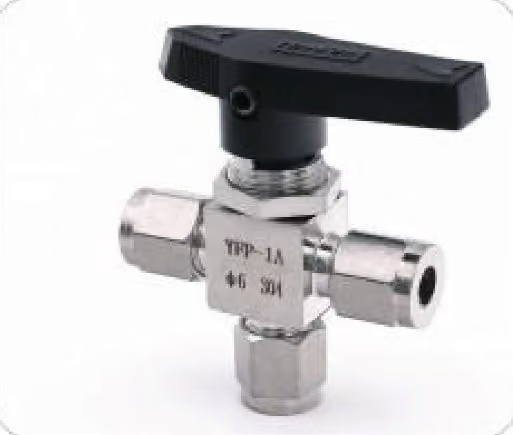
That thicker wall is also why compact wrench-flats bodies such as the hex-body compression ball valve fit where a round body will not.
What does it cost you in flow?
A full port valve adds almost no restriction — its flow coefficient (Cv) approaches that of straight pipe. A reduced port valve acts like a short, abrupt contraction and expansion.
In a 1” water line at 3 m/s, the reduced port might add the equivalent of several metres of pipe in pressure drop. That is negligible on a drain valve and meaningful on a pumped recirculation loop running near its curve.
If the valve throttles flow continuously, neither type is right — use a control valve or needle valve. Ball valves are for shutoff, and the port question is about what happens when they are fully open.
When is reduced port the right call?
Most of the time. Utility isolation, tank drains, sample points and branch shutoff valves see intermittent flow at modest velocity, and a reduced port valve performs identically for less money.
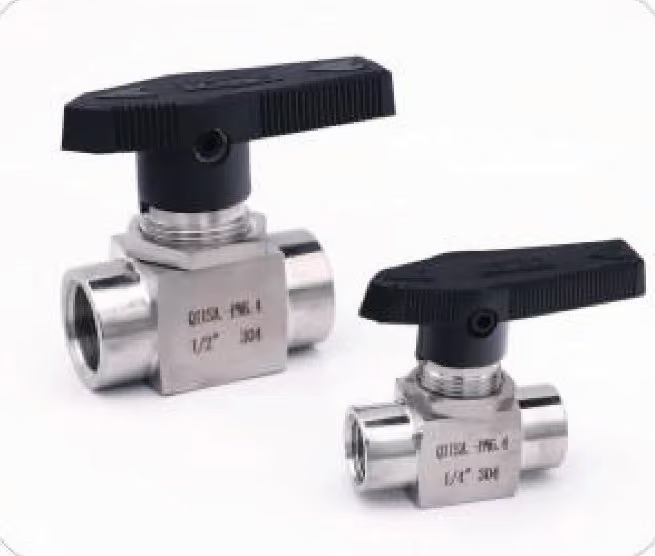
The smaller bore also survives cavitation-prone spots slightly better, because the body around it is thicker. Our female threaded ball valve line ships both bores for exactly this reason — ask which bore the stocked size carries when you RFQ.
Before you accept a reduced bore, confirm:
- Flow is intermittent at modest velocity, not a continuous transfer.
- Nothing in the line has to pass: no pig, swab or probe.
- The valve is not on pump suction.
- The line schedule does not call out a Cv the reduced bore cannot meet.
- The bore you are quoted is the bore you specified.
When must you go full port?
Four duties make the bore non-negotiable:
- Pump suction lines: added restriction at the suction raises NPSH requirements and can invite cavitation. Go full bore.
- Pigged or probed lines: inspection pigs, foam swabs and sampling probes need pipe-size passage. Reduced bore stops them cold.
- High-velocity transfer or recirculation: compute the pressure drop at design flow; if the valve’s Cv costs you more than a few percent of pump head, go full port.
- Sanitary transfer: full bore with tri-clamp ends avoids product hold-up at the bore step. See tri-clamp fittings for the clamp side.
What goes wrong when you swap bores?
A 1” reduced port valve and a 1” full port valve share end connections but not hydraulics. Swapping one for the other on a balanced loop quietly changes flow distribution across branches.
If your line schedule calls out Cv values, quote the valve’s Cv on the RFQ, not just the nominal size — the ball valve category lists stocked bores per size.
| Symptom | Most likely cause | What to change |
|---|---|---|
| Branch flows drift after a valve replacement | Bore swapped: same nominal size, lower Cv | Fit the full port valve the schedule’s Cv assumed, or rebalance the loop |
| Pump cavitates or loses head | Reduced bore on suction; NPSH requirement raised | Full port on the suction line |
| Pig stalls or swab tears | Reduced bore in a pigged line, or a full port valve part open | Full bore, and confirm the valve is fully open |
| Product hold-up, cleaning failure | Bore step at a reduced port valve in sanitary duty | Full bore with tri-clamp ends |
| Solids settle and wear at the valve | Bore step traps settled solids | Full bore with hard-faced seats, or another valve type |
| Sample probe or swab will not pass | Reduced bore stops it cold | Full port |
FAQ
Does port size affect pressure rating? No directly — rating comes from body and seat design. But reduced bore valves often rate slightly higher in compact bodies because of the thicker wall, and full port high-pressure valves get large and expensive fast.
Can a pig pass through a full port ball valve? Yes, that is the point of full bore. The ball must be fully open; a partially open full port valve is still a blockage and will destroy the pig.
Is Cv the same as port diameter? No. Cv is the measured flow capacity (US gpm of water at 1 PSI drop). Port diameter drives Cv, but body geometry matters too — compare Cv on the datasheet, not bore on a drawing.
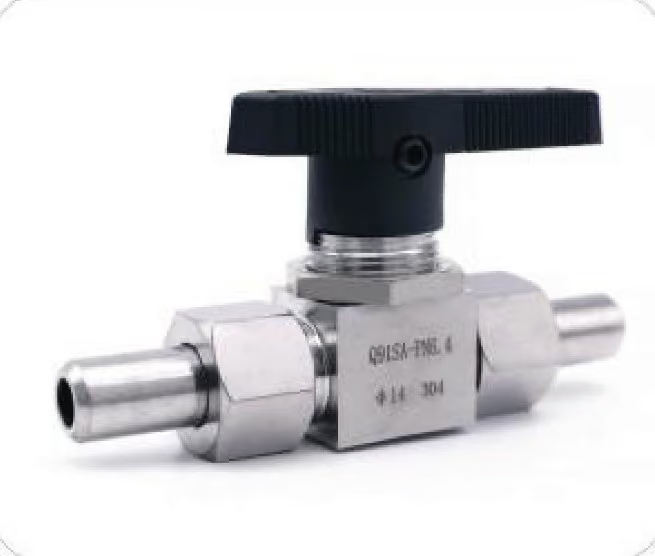
Which bore do compression-end ball valves usually have? Compact compression valves are typically reduced bore for the same cost and wall-thickness reasons. If you need full flow at compression ends, say so on the RFQ — it changes the body casting.
Reduced port for slurry service: acceptable? Avoid it. The bore step is a trap for settled solids and a wear point for abrasive flow. Full bore, hard-faced seats, or a different valve style entirely.