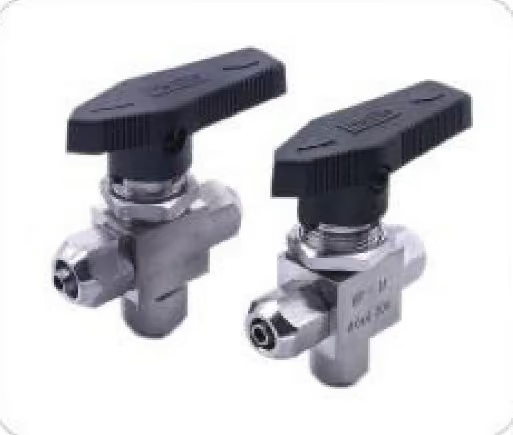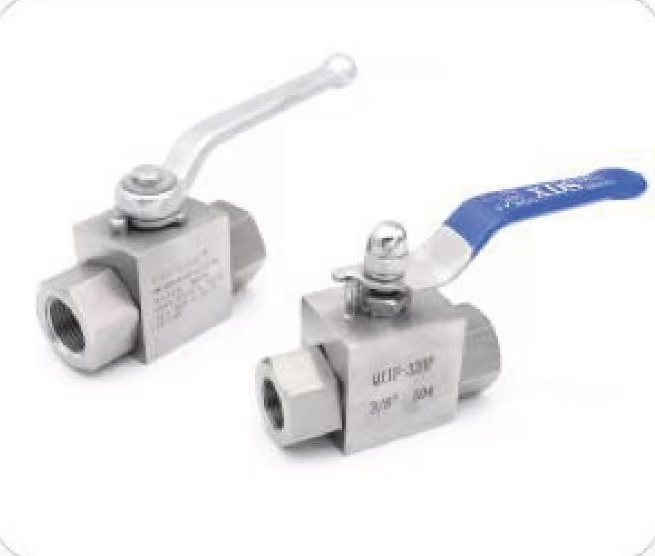
Gate valve or ball valve — it resurfaces when an old isolation valve starts weeping, and it is two questions in one coat: how the valve seals, and how that seal ages.
For frequent on-off duty, fit a ball valve: quarter-turn, fewer wear points, seats a 3-piece body replaces in line. For large-bore, low-pressure isolation that is operated rarely, a gate valve still wins on head loss and on cost at diameter.
A gate valve parks a wedge across the flow and needs it to seat cleanly every time; a ball valve spins a bored sphere a quarter turn against soft seats.
Neither is “better” — they fail differently; pick the failure your maintenance program can see coming.
Key takeaways
- A gate valve seals by wedging a flat gate between two seats. Fully open it is a straight, empty pipe — but an isolation valve only; throttle it and the jet wire-draws grooves into gate and seats.
- Gate valves age by accumulation: scale and debris lodge in the seat groove, so the gate closes yet never seals; stems and packing seize or weep. Hard water makes everything worse.
- A ball valve seals quarter-turn, pressure-assisted onto the downstream seat. Wear shows at the seats and stem seal — parts a 3-piece body replaces in line.
- Quarter-turn beats multi-turn in frequent service; a gate valve left unexercised seizes, discovered only in the emergency.
- Gate keeps the large-bore, low-pressure isolation jobs; a full-port ball valve replaces it everywhere else, ends and face-to-face permitting.
Which one do I need?
The duty decides before the valve does. Read down the first column, then the last one: it names the property that overrides everything else.
| Duty | Gate valve | Ball valve | What decides it |
|---|---|---|---|
| Frequent on-off cycling | Many handwheel turns; seizes if left unexercised | 90-degree lever; rated for frequent cycling | How often the line cycles |
| Large bore, low pressure, infrequent isolation (water mains, fire protection) | Default choice: straight-through path, minimal head loss | Needs a big heavy sphere, a seat to suit that bore, high actuation torque | Bore and pressure |
| Hard or stagnant water | Scale fills the gate groove, packing weeps, stem binds | Tolerates stagnant hard water better | Water quality |
| Solids in suspension | Standard wedge is not a slurry valve — the body cavity collects solids | Abrasives score the ball and the seats | Suspended solids |
| Throttling | Wire-draws grooves into gate and seats | Not a control valve either | Whether the duty is isolation |
| Replacing an existing valve | Face-to-face per ASME B16.10 | Full-port body; ends and face-to-face must fit | Whether ends and face-to-face match |
A gate valve is an isolation valve: fully open or fully closed, nothing in between. A ball valve is also an isolation valve, but one whose seal can be replaced without cutting the line, and whose quarter-turn can be automated.
How does each one seal?
The gate valve moves a gate across the flow into two body seats; in the wedge design the angled faces jam against both as the stem drives down. Open fully, the gate leaves the flow path entirely — a near-straight-through passage with minimal loss.
The ball valve rotates a bored sphere 90 degrees: bore aligned for open, solid wall for closed. Closed, line pressure pushes a floating ball into the downstream seat — higher differential, harder seal. Trunnion balls pin the sphere so the seats skip the pressure thrust.
The bore question has its own post: full port vs reduced port ball valves.
Why does a gate valve leak when it is closed?
A gate valve leaks when closed for one root cause: lost continuous contact between gate and both seats. Everything below is a way of losing it.
| Symptom | Most likely cause | What to change |
|---|---|---|
| Gate travels fully, line still passes | Sand, rust flakes or scale fragments lodged between gate and seat | Strip and clean, reseat, screen upstream |
| Gate seats on crystals | Mineral scale built up in the gate groove | Clean the groove; hard water makes this recurrent |
| Gate no longer seats flat, travel stops short | Seats wire-drawn by past throttling; wedge deformed | Reseat or replace — and stop throttling with it |
| Handwheel fights back on an emergency valve | Scale on stem threads, dried lubricant, compressed packing, bonnet corrosion | Exercise on a schedule; never force a seized stem |
| Packing weeps | Packing compressed by years of gland adjustment | Repack the gland |
| Ball valve passes when closed | Seats worn or cold-flowed; abrasives scored the ball | Seats in a 3-piece body — ball and seats together |
Ball valves age differently: seats wear or cold-flow, the stem packing is the external-leak path, abrasives score the ball. They tolerate stagnant hard-water service better — no multi-turn stem crossing the packing in the wetted path, no groove for scale to fill. Not immune, differently vulnerable.
Trim corrosion lives in valve trim materials; body ratings in ball valve ratings explained.
Is quarter-turn worth it on a line that cycles?
A gate valve needs many handwheel revolutions to open or close; a ball valve a 90-degree flick of the lever. On a daily-cycling line the quarter-turn valve wins on every count: fast, easy to automate, low maintenance, rated for frequent cycling.
A gate valve in infrequent service has the opposite habit — it seizes. Corrosion, mineral buildup, dried lubricant and compressed packing bind the stem, discovered only when it must close.
The remedy is exercise: run shutoff valves through full travel on a schedule. The gate that fails early is the one nobody touched for ten years, and the handwheel that fights you during an emergency is already a work order.
One rule for both: neither is a throttling valve.
Where does a gate valve still win?
Size and pressure rebalance the comparison. Gate valves remain the default for large sizes at low-to-moderate pressure — municipal water mains, fire-protection lines — where the duty is infrequent isolation and flow must pass straight through at minimal head loss.
Cost matters at diameter. A large ball valve needs a big heavy sphere, a seat to suit that bore and high actuation torque, so the crossover favours the gate as bore grows.
One caveat: standard wedge gates are not slurry valves — the body cavity collects solids and destroys the seats. Slurry duty belongs to knife-gate designs. In clean service the wedge does its quiet job for decades.
How do I swap a gate valve for a ball valve?
Here the debate becomes a checklist, and the first item is the bore.
- Set the bore. A full-port ball valve gives the same unobstructed path as a fully open gate; a reduced-port ball throttles the line — precisely what the gate was not doing.
- Match the ends. Flange standard, class, facing and bolt pattern; thread form; weld prep. They must match the pipeline, not the old valve’s catalogue page.
- Check face-to-face. It must fit the gap; if it differs from the old gate or from ASME B16.10, plan a spool or a dismantling joint.
- Confirm pressure, temperature and materials, plus the shutoff rating — a seat question more than a body question. Body-style trade-offs sit in 1-piece vs 2-piece vs 3-piece ball valves.
- Verify operating clearance and closure speed. The lever needs 90 degrees of swing and there must be room to drop a 3-piece centre section for seat service; a ball valve can slam shut hard enough to hammer the line, so larger sizes get controlled actuation.
Before it goes on the RFQ:
valve type and bore— full port or reduced port; gate only for large-bore, low-pressure, infrequent isolation duty.line size and pressure class— the rating, not just the pipe schedule.ends— thread form, flange class and facing, weld prep; face-to-face when matching an existing valve.medium and water quality— hard or soft, suspended solids, cycle frequency; seats and packing follow.- One line list, one quote.
Our ball valves range quotes full-port and reduced-port bodies as separate lines.
FAQ
Why does my gate valve still leak when it is closed?
Usually debris, rust flakes or mineral scale sits between gate and seat — the gate travels fully yet seals on a bed of crystals. Less often the seats are wire-drawn or the wedge deformed. Wire-drawn seats do not come back.
Is a ball valve a full-bore replacement for a gate valve?
A full-port ball valve is, functionally: bore matching the pipe ID, the same straight-through low-loss path as a fully open gate. A reduced-port ball is not — the smaller bore throttles flow. Match ends and face-to-face; check the lever swing.
Can I throttle with a gate valve?
No. Partly open, flow accelerates through the gap into a jet that grooves gate and seats — wire-drawing — while the unsupported gate chatters and scores seats and bends stems. Gate valves are for isolation: fully open or fully closed.
Which lasts longer?
Duty decides. In frequent on-off service the ball valve: fewer wear points, no threaded stem crossing the packing, seats a 3-piece body replaces in line. In clean, low-cycle isolation an exercised wedge gate lasts decades.
Why is my gate valve so hard to turn?
Scale on the stem threads, dried lubricant, packing compressed by years of gland adjustments, corrosion in the bonnet — hard water accelerates all of them. Exercise it on a schedule. Force a seized one and you bend the stem.