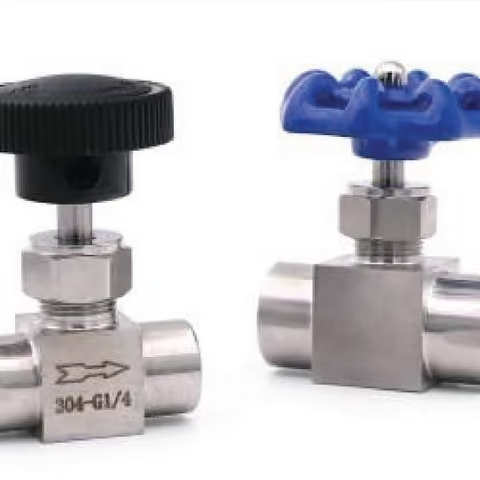
Instrument Bleed Valve
Instrument Bleed Valve: vents trapped pressure between closed blocks and flags seat leakage. SS304/316 stainless. FerruleX factory RFQ.
- Brand
- FerruleX
- Material
- SS304 / SS316
- Ends
- Threaded ports, bleed outlet
- Service
- Closed in normal duty; opened for maintenance
- Body family
- Needle-valve pattern
- Stock5–7 days after confirmation
- Make to order15–25 days production
- Payment / termsT/T ~30% or L/C · FOB Shanghai / Ningbo
- OEMLogo and drawings accepted · price on RFQ
Description
A bleed valve is not a small needle valve with a different label. Its job is to open the volume between two closed blocks to atmosphere so an instrument can be taken off without carrying pressure in the joint, then close again. In service it stays shut. In maintenance it answers two questions at once: whether the isolated volume is empty, and whether the block upstream is passing, because a stream that keeps coming with the block shut is a leaking seat rather than residual pressure. The body follows the needle-valve family in 304 and 316 stainless, with the thread form named per port and the bleed outlet routed to a safe point rather than into a cabinet.
Opens the isolated instrument volume to atmosphere before a gauge or transmitter comes off, and doubles as a seat-tightness check when the block upstream is closed. Closed in normal service. Thread form named per port; route the bleed outlet somewhere safe rather than into the panel.
- Duty
- Vent the isolated volume before an instrument is removed.
- Check
- With the block shut, a steady flow points to a passing seat.
- Routing
- Bleed outlet goes to a safe point, not into the cabinet.
- Materials
- SS304 / SS316 stainless body, thread form named per port.
Specifications
| Specification | Value |
|---|---|
| Brand | FerruleX |
| Material | SS304 / SS316 |
| Ends | Threaded ports with a bleed outlet |
| Service | Closed in normal duty, opened for maintenance |
| Body family | Needle-valve pattern |
| Class | Confirm on the RFQ with the take-off conditions |
Request Quote
Prices stay on the RFQ. Send size, material, quantity and destination — the factory replies with price, lead time and packing. Packing, payment and the usual quote questions are on thedelivery pageand the FAQ.
Questions about this part
How does a bleed valve differ from a gauge root valve or a plain needle valve?
A root valve isolates the instrument and stays in that duty; a needle valve is shaped to meter. A bleed opens the trapped volume to atmosphere and closes again, so the duty is stated on the order rather than inferred from the body.
Is a bleed valve a metering device or a shut-off device?
Shut-off. It is fully closed in normal service and fully open when the instrument comes off, so there is no reason to throttle it. Anyone who needs fine control buys a needle valve for that job.
With the block closed and the bleed open, how do I tell a passing seat from residual pressure?
Residual pressure falls away and stops. Flow that keeps coming with the block shut is a leaking seat, not stored volume. That is a maintenance check, and the bleed stays closed while the instrument is in service.
Should a bleed be opened slowly when the trapped pressure is high?
Yes. Opening a bleed into a large differential puts the whole drop across the seat at once, and the jet can cut the seat or the stem tip. Crack it, let the pressure fall, then open fully.
What damages the stem tip on a bleed valve?
Over-tightening on the close, and grit carried through the seat. A bleed is a small port, so a hard close gives little feel and the tip takes the load; stop at contact rather than forcing the handle.
Which body pattern should I specify for a bleed valve?
The body follows the needle-valve family, and the pattern is named on the RFQ with the port threads. Choose the one that points the outlet where the vent can discharge safely, clear of the panel face.
Related products
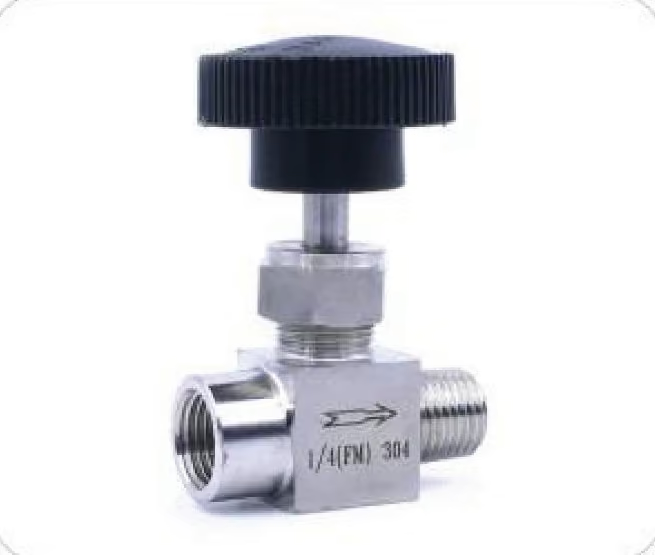
Stainless Steel Gauge Root Valve, NPT & BSP Threads
Gauge Root Valve: primary isolation at the gauge take-off, single or multi-port. SS304/316 stainless. FerruleX factory RFQ.
View details →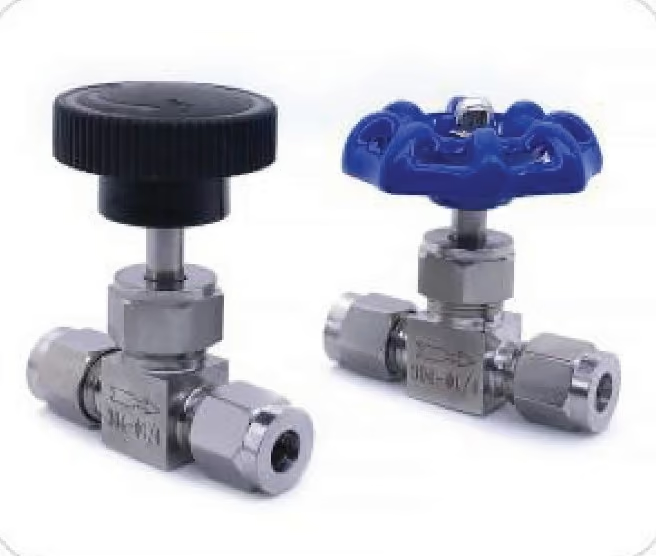
Straight Compression Needle Valve
Straight Compression Needle Valve: stainless steel needle valve, double-ferrule, fine metering. FerruleX RFQ. Stocked sizes ship fast. Fast stock shipping.
View details →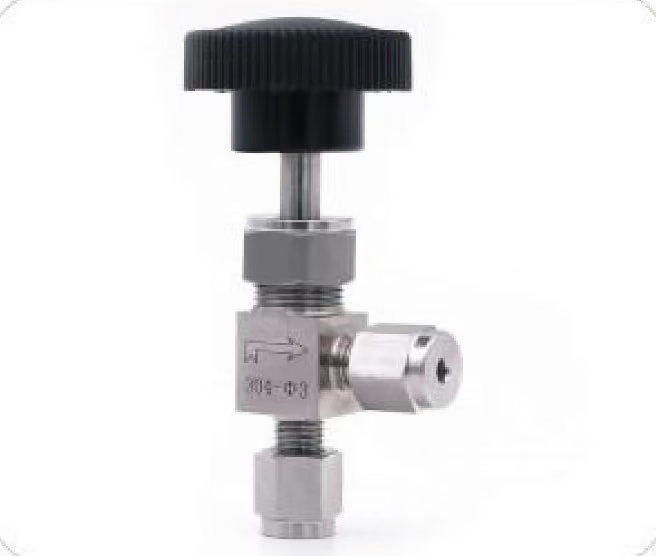
Angle Compression Needle Valve — Sizes & Specs
Angle Compression Needle Valve: 90° stainless steel needle valve with double ferrules. FerruleX RFQ. Stocked sizes ship fast. Export RFQ only — no cart.
View details →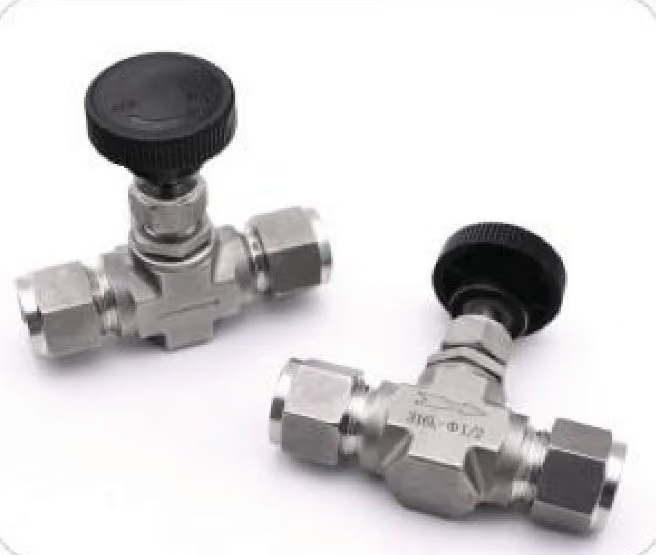
Forged Compression Needle Valve — Sizes & Specs
Forged Compression Needle Valve: forged-body stainless steel needle valve for vibration. FerruleX RFQ. Stocked sizes ship fast. Export RFQ only — no cart.
View details →