Stainless Steel Fittings & Valves for Pharmaceutical & Biotech
Pharma duty is purity plus paperwork. State whether a line touches product or only instruments, ask for the material certificates, and the quote separates high-purity tube from plain utility fittings — with documentation aligned to the order.
Why pharma needs stainless
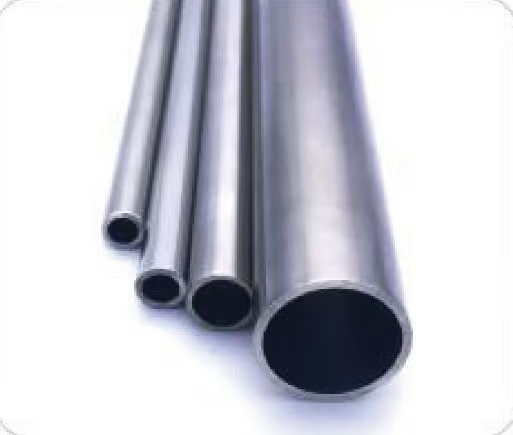
The driver is contamination control. Process and utility lines in pharmaceutical and biotech plants must be cleanable, purgeable and documentable — every material traceable, every joint crevice-free, every surface that contacts the stream smooth enough not to harbor residue. That is why the industry runs 316L stainless with bright annealed tube: the smooth, oxide-free internal surface of BA tube cleans and purges reliably, and low-carbon 316L stands up to the cleaning regimes. The tube reasoning is covered inbright annealed tubing, and the joint logic — why instrument fittings here are built to a leak-tight criterion — in what are instrumentation fittings.
Typical duties in a pharma plant
Our catalog serves the instrument, purge and utility side of a pharmaceutical plant rather than the product manifolds: analyzer and sample lines on process skids, purge and vent lines around vessels and isolators, clean-utility instrumentation on water and clean-steam systems, and laboratory and panel gas distribution. Product-contact manifolds for WFI or product itself are orbital-weld sanitary systems under ASME BPE — a different supply chain — and we say so instead of quoting a compression fitting into a validated product line. Where the duty is sanitary-adjacent rather than validated, the boundary discussion fromsanitary stainless fittings applies line by line.
Reading the BPE spec callouts your drawings use
Pharma drawings and RFQs are written in ASME BPE vocabulary, so it pays to read the callouts even on lines this catalog does not supply: ASTM A270 names the sanitary tube, an SF designation names the product-contact surface, and the product-contact versus instrument split is what decides which side of the supply chain a line belongs to. The vocabulary matters because a misread callout sends a quote down the wrong path: an SF term read as a generic 'polished finish' invites a generic-polish quote, and the gap surfaces at installation rather than at order time. Part SF of the BPE code defines the surface designations used on those drawings, and each designation binds a maximum Ra and a finishing route at once:
| Designation | Max Ra (µin) | Max Ra (µm) | Finishing route |
|---|---|---|---|
| SF0 | No requirement | No requirement | None specified |
| SF1 | 20 | 0.51 | Mechanical polishing |
| SF2 | 25 | 0.64 | Mechanical polishing |
| SF3 | 30 | 0.76 | Mechanical polishing |
| SF4 | 15 | 0.38 | Electropolishing |
| SF5 | 20 | 0.51 | Electropolishing |
| SF6 | 25 | 0.64 | Electropolishing |
On pharma work the product-contact callout is commonly SF4. Read the values as maximums, not averages, and note that an electropolished surface is not automatically SF4 — it holds whichever designation its measured Ra falls into. Where a drawing states only a roughness number and skips the designation, ask which route the number assumes: the same ceiling sits at a different rung on the mechanical route than on the electropolished one. If your drawing carries SF terms, quote the designation back on the RFQ rather than the bare word electropolished; what electropolishing does to a surface, and how it differs from passivation, is covered in electropolishing vs passivation.
Duty to product family
| Duty | Recommended FerruleX family | Grade / note |
|---|---|---|
| Analyzer and sample lines | BA tube + compression fittings | SS316L; smooth bore, crevice-free joints |
| Purge and vent distribution | Coil / precision tube | SS316L; purgeable runs with certificates |
| Sample point metering | Needle valves | SS316L; fine control at the take-off |
| Isolation on instrument lines | Ball valves | SS316L bodies |
| Vessel and skid flex connections | Corrugated hose assemblies | SS316; movement and vibration only, not product duty |
| Mixed-thread panel manifolds | Adapters and weld fittings | SS316L; identify thread standards per port |
RFQ scenarios by product family
The table above maps duty to family; these are the RFQ phrasings that make each quote fast. Each scenario reads the way a good RFQ line reads — one line of drawing language instead of a paragraph of adjectives.
Analyzer and sample lines. State A269 tube, BA where purge and cleanliness demand it, SS316L, OD × wall per line, and the compression fittings to match — with material certificates named on the order. Per line is the operative phrase: a skid can carry three line sizes, and each gets its own tube spec, fittings and certificate requirement.
Purge and vent distribution. Coil and precision tube in SS316L, specified as purgeable runs with certificates, so the mill and the finish travel with the order. Name the cleanliness expectation in the same line and the finish question answers itself.
Sample-point metering. A needle valve at the take-off in SS316L: state the fine-control duty and the connection standard, and the quote matches the valve to the line. If the take-off feeds an analyzer, say so — metering for a reading is quoted differently from a manual draw-off.
Instrument isolation. Ball valves with SS316L bodies: state end forms and thread standard per port so the valves land panel-ready. State them per valve, not per panel — the ports rarely match.
Mixed-thread panel manifolds. Adapters and weld fittings: identify the thread standard on every port — the mixed-panel trap is misidentified threads, not missing parts. A panel that mixes NPT, BSPP and metric ports is quoted accurately only if each port is listed.
Standards context
Instrument and utility tubing follows ASTM A269 conventions, with ASTM A270 for sanitary tube, as covered inbright annealed tubing. Compression joints follow ISO 8434-1 / DIN 2353 practice frombite-type fittings explained. ASME BPE governs product-contact sanitary systems — referenced insanitary stainless fittings — and that duty sits outside this catalog; we quote the instrument and utility lines around those systems.
Food-grade versus BPE: two spec worlds
Hygienic spec language is not one vocabulary. Food and beverage equipment is usually written around the 3-A Sanitary Standards, while bioprocessing and pharmaceutical product-contact systems are written around ASME BPE — different documents with different surface and joint requirements, and the two vocabularies do not interchange. "Food-grade" on its own names no standard and no document; the standard a line must follow is whichever one its drawing cites. For procurement the working rule is simple: quote the spec the drawing uses, per line, and treat any finish or joint described only by an industry adjective as unspecified until the designation is named. Mixing the two on one RFQ — a 3-A tube callout beside a BPE surface callout — usually means the drawing itself needs resolving before the quote does. The food-side vocabulary is unpacked in the sanitary fittings page referenced above; this section only draws the boundary between the two spec worlds.
What to state on the RFQ for pharma duty
- Product-contact, product-adjacent or instrument/utility duty per line — the dividing line for sanitary versus industrial supply.
- Tube specification (A269 or A270) and surface requirement, BA where purge and cleanliness demand it.
- Grade call-out, normally SS316L, plus the certificate requirement — material certificates are provided on request and should be named on the order.
- Cleaning regime the line must survive — chemicals and temperatures.
- Tube OD × wall, thread standard and end forms per line.
- Surface-finish callouts as designations (SF terms) where drawings use them — not bare finish words.
Ready to order from the factory?