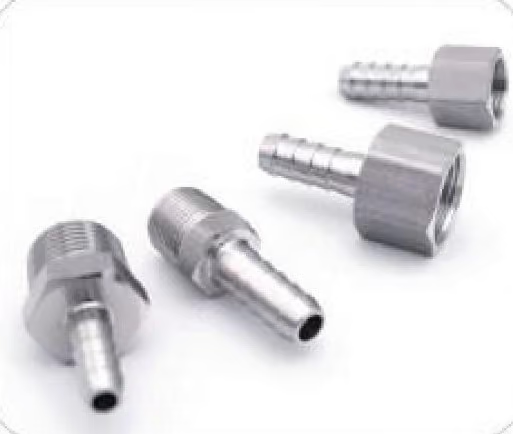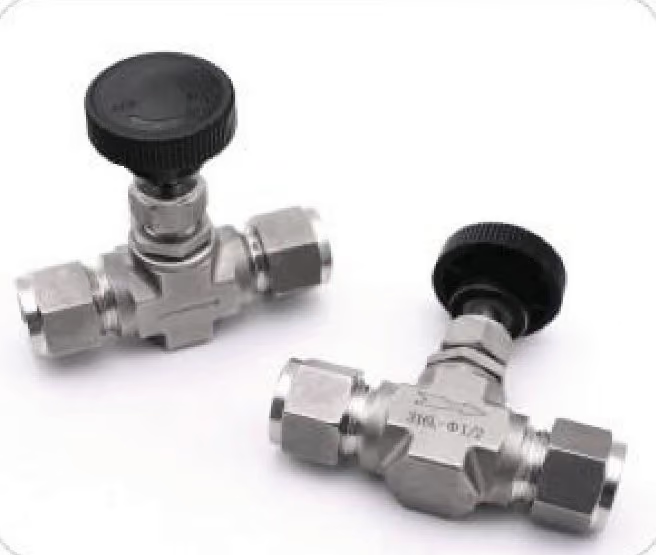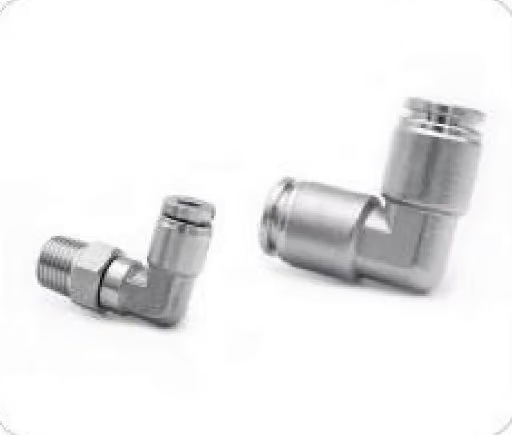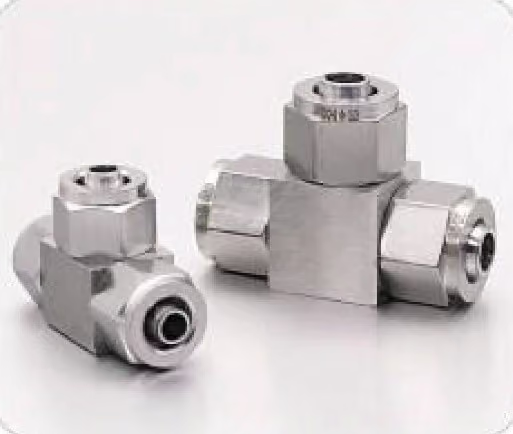
Is stainless magnetic? Austenitic grades like 304 and 316 are essentially non-magnetic in the annealed condition — their crystal structure will not align with a field. Ferritic and martensitic grades are magnetic: same iron, different lattice.
So the magnet cannot grade your stainless. A 304 part that pulls is usually correct material that has seen cold work. Magnetism reads structure, not composition.
Key takeaways
- Crystal structure decides: face-centered-cubic austenite is non-magnetic; body-centered ferrite and tetragonal martensite are magnetic.
- Annealed austenitic permeability sits near 1.0 — published figures run 1.003 to 1.02 — which is functionally non-magnetic.
- Cold working 304 partially transforms austenite to martensite: drawn bar runs a relative permeability around 1.1–2, and heavy cold rolling reaches the majority of the structure — published research puts 80% cold-rolled 304 near 95% martensite versus about 52% for 316.
- 316’s higher nickel plus its molybdenum stabilize austenite, so the same cold work magnetizes it less.
- Magnetism does not grade stainless — it reads cold work, not composition. The field test that separates 304 from 316 is chemical, not magnetic.
Should I reject a magnetic 304 fitting?
Not on magnetism alone. Cold work is the usual cause: drawing, bending, threading and pressing all shift part of the austenite toward magnetic martensite, and the fraction tracks how hard the part was worked.
The receiving-dock paradox is therefore the expected result, not a substitution: the annealed bar passes the magnet, the bent fitting beside it fails, and both come from the same heat. Reject on chemistry, dimensions or certificate grounds instead.
| Symptom | Most likely cause | What to change |
|---|---|---|
| Annealed bar stays clear, bent fitting pulls | Cold work turned part of the austenite to martensite | Nothing if the spec allows cold work; state the cold-work state in the RFQ if it does not |
| A whole consignment pulls, annealed stock included | Wrong family or wrong grade supplied | Verify chemistry before accepting — spot test or PMI, not a magnet |
| 316 pulls less than 304 after the same bend | 316’s nickel and molybdenum hold the austenite against transformation | Expected behaviour; no action on the grade |
| The part is magnetic and the job cannot tolerate it | Either cold work or the wrong family | Re-specify annealed condition with a permeability ceiling, or change family |
Which stainless grades are magnetic?
| Family | Grades named in this post | Answer to a magnet | What decides it |
|---|---|---|---|
| Austenitic, annealed | 304, 316 | Effectively none | Face-centred cubic lattice; the atomic moments cancel |
| Austenitic, cold worked | 304, 316 | Pull grows with the strain | The martensite fraction the cold work forms |
| Ferritic | 430 | Magnetic | Body-centred cubic ferrite aligns with the field |
| Martensitic | 410, 420 | Magnetic | Body-centred tetragonal martensite aligns with the field |
Iron atoms in the body-centred cubic lattice of ferrite, or the body-centred tetragonal lattice of martensite, align with a magnetic field. Those two families are the magnetic ones: the ferritic 430s of the appliance world, the martensitic 410 and 420 of cutlery and fasteners.
Add roughly 8% nickel and 18% chromium, as 304 does, and the lattice switches to face-centred cubic austenite, where the atomic moments cancel. That is the whole taxonomy: austenitic non-magnetic, ferritic and martensitic magnetic.
The grades are catalogued by family in the stainless steel grades chart. Grade-level differences within the austenitics sit in 316 vs 316L, and the selection logic in the grades field guide.
Why does cold-worked 304 attract a magnet?
The austenite-to-martensite transformation is strain-driven, and cold work is the strain. Bending, drawing, threading and pressing shift part of the austenitic structure toward the magnetic martensitic one, and the fraction tracks the severity of the work.
Annealed austenitic relative permeability is published at 1.003–1.02, rising to roughly 1.1–2 on 10–20% drawn bar. At extreme reductions, the research literature reports 80% cold-rolled 304 reaching about 95% martensite by volume.
A pressed fitting shoulder, a swaged tube end, a heavily threaded run: each shows a magnetic pull the annealed bar beside it does not.
316 transforms less for the same strain — the published comparison puts 80% cold-rolled 316 near 52% martensite, attributed to the austenite-stabilizing nickel and molybdenum. It stays cooler under the magnet, not immune, just slower to convert.
What does magnetism not tell you?
The magnet reads structure, not composition, and the properties buyers care about ride composition. Corrosion behaviour comes from the chromium, nickel and molybdenum percentages, which cold work leaves untouched.
A magnetic 304 elbow is not a fake, not a downgrade and not a pitting sentence. The corrosion references state plainly that magnetic response and quality are independent properties, and that cold work alone costs little corrosion resistance.
The honest hedge for extreme cases: very heavy cold work can leave residual stresses that matter in specific environments — the chloride-stress regime of chloride stress corrosion cracking among them. That is a stress story, not a magnetism story, and it belongs in the service review, not the receiving inspection.
Which test grades 304 versus 316?
The practical field test is the molybdenum spot test. A reagent drop on an abraded, degreased surface turns brown where molybdenum is present and stays clear where it is absent.
The published reading is that the brown threshold sits around 0.15% molybdenum, so 316 browns and 304 stays clear within minutes. The procedure:
- Step 1 — Take a scrap-off coupon or an offcut, not a show surface. The reagent is acidic and leaves a mark.
- Step 2 — Abrade the spot down to bare metal.
- Step 3 — Degrease the spot and let it dry.
- Step 4 — Drop the reagent onto the prepared surface.
- Step 5 — Read the colour: brown means molybdenum present, clear means it is absent.
Combined with the caliper-and-gauge routine from the thread-identification post, that verifies grade and standard in the receiving bay. The pitting corrosion post covers why 304 versus 316 is worth that minute in chloride country.
What do I write in the RFQ?
- Magnetic requirements — if the installation forbids magnetic response, state it: annealed condition, low-permeability requirement, or a defined permeability ceiling.
- Cold-work state — as-drawn or annealed; the words that predict the magnet behaviour.
- Grade verification — PMI or spot-test on receipt, where substitution risk is real.
- Test surface — coupon or scrap-off piece, not the finished face the reagent would mark.
- Documentation — a mill certificate naming grade and condition, so the magnet is never the only evidence on the file.
FAQ
Will annealed 316 be non-magnetic?
Essentially yes. Published relative permeability starts at about 1.003 against 1.0 for a vacuum, and 316’s nickel and molybdenum hold the austenite stable until cold work adds up. Non-magnetic in practice, not a mathematical zero.
Does a magnet sticking to my 304 fitting mean it is fake?
No. Drawing, bending, threading and swaging transform part of the austenite to magnetic martensite, and the magnet reads that transformation, not the composition. Verify grade with a molybdenum spot test; do not reject on magnetism alone.
Which stainless is magnetic?
Ferritic grades like 430 and martensitic grades like 410 and 420 are magnetic. Austenitic 304 and 316 are non-magnetic when annealed and partially magnetic after heavy cold work, because strain converts part of the structure to martensite.
Why is 316 less magnetic than 304 after bending?
Austenite stability. The higher nickel and the molybdenum in 316 hold the lattice against strain-driven transformation, so the same work produces less martensite — published figures put 80% rolled 304 near 95% martensite against about 52% for 316.
How do I check 304 versus 316 at the bench?
Magnetism cannot do it. Use the molybdenum spot test: it turns brown on 316 and stays clear on 304, with the brown threshold near 0.15% molybdenum. Abrade, degrease, drop, read.