Stainless steel ball valve vs brass is not a quality contest — it is a duty contest.
Use brass for clean, low-chloride water and air inside its 600 WOG class. Use stainless for chlorides, seawater, chemicals, food and pharma, heat above the brass ceiling, or any line where a failed valve stops production. Dezincification, not price, is what settles it.
Key takeaways
- The deciding failure mode is dezincification: common free-machining brass carries ~35% zinc, and in warm, stagnant or chloride-bearing water the zinc leaches out, leaving a porous copper shell that fails without warning — stainless contains no zinc and is immune.
- The envelopes differ by construction: typical brass ball valves run 600 WOG class to roughly 160–185 °C, while stainless runs 1000 WOG and beyond to about 220 °C+ — though in both families the seat material, not the body, often sets the real ceiling.
- Cost is real but so is scope: brass valves commonly run two to three times cheaper, which is money well saved on benign water and air — and money wasted on chlorides, seawater, chemicals, food contact or any line where a failed valve costs production.
Which one do I need?
Match the material to the media first, then to pressure and temperature. Cost is the last column to read, not the first. In the table the right-hand column is what actually settles each row.
| Aspect | Stainless (304/316) | Brass (C36000 class) | What decides it |
|---|---|---|---|
| Chlorides / seawater | Excellent in 316 (Mo-bearing); 304 limited | Poor — dezincification risk | Chloride level: brackish or seawater rules brass out |
| Dezincification | Immune — no zinc | Susceptible above ~15% Zn; severe near 35% | Water chemistry — warm, stagnant, soft or chloride-borne |
| Temperature | To ~220 °C and beyond by seat | To ~160–185 °C; derates steeply with heat | The seat’s P-T curve, not the body class |
| Pressure class | 1000 WOG standard; HP classes above | 600 WOG typical | Line pressure against the WOG rating |
| Media | Chemicals, food, pharma, marine, most fluids | Potable water, air, oils, fuels — benign media | Whether the media attacks zinc or needs cleanability |
| Potable compliance | Naturally lead-free | Must be certified lead-free (e.g. NSF 61/372) | Local code and the lead-free certificate |
| Weight / machining | Heavier, harder to machine | Lighter, machines fast | Handling and installation, not service life |
| Cost | Two to three times the brass valve | The budget option | What a failed valve costs on that line |
Read the row that matches your worst condition, not your average one. A line that runs benign water most of the year and takes a chloride flush once a quarter is a chloride line.
Where is brass the right answer?
Clean, low-chloride potable water, compressed air, hydraulics and heating circuits within its rating. Brass machines faster and cheaper, threads easily, and decades of plumbing history say it lasts 20-plus years in benign water.
If the media is neutral, the temperature moderate and the pressure inside the 600 WOG class, brass is the economical answer. Stainless adds purchase cost without adding service life.
One condition: the water must actually be benign. Warm, soft, low-alkalinity or chloride-bearing water turns the same valve into a dezincification case — hot-water recirculation lines are the classic casualty. Potable duty demands certified lead-free brass regardless.
Where is only stainless honest?
Chlorides and seawater. Dezincification eats ordinary brass, and even the stainless choice must be 316 in real chloride service. 304 is not a substitute: the molybdenum is what buys the pitting margin, the same grade logic as SS304 vs SS316.
Temperature above the brass ceiling, where brass strength falls off steeply with heat. That is a derating question, not a quality question. Check the seat rating separately, because PTFE limits both materials.
Chemical, food, dairy and pharma media, where cleanability and media compatibility rule brass out: a wetted surface that cannot be cleaned properly is a liability on that duty. Marine splash and washdown belong in the same group.
Anywhere a failed valve stops production: the two-to-three-times price gap is small against one unplanned isolation, and that is the whole argument for stainless on a line nobody wants to shut down.
What about DZR brass?
Where the water is aggressive but stainless is not justified — aggressive municipal supplies are the textbook case — dezincification-resistant brass caps zinc below roughly 15% and adds inhibitors. Low-zinc bronzes such as C83600 sit below the susceptibility threshold.
DZR runs 10–20% over standard brass and is mandated by plumbing codes in affected regions. It is the right answer for potable water that would eat C36000 but does not need stainless economics — a niche, but a real one.
What fails, and what do I change?
Most field failures fall into a handful of patterns, and the material answer is usually already in the symptom. Read the cause before you change the valve type.
| Symptom | Most likely cause | What to change |
|---|---|---|
| Body weeps from pinholes; wall looks porous and copper-red | Dezincification of high-zinc brass in aggressive water | DZR brass or low-zinc bronze where economics demand; stainless where chlorides are real |
| Valve fails on a hot-water recirculation line, cold lines last | Warm, soft, low-alkalinity or chloride-bearing water | DZR brass, or stainless for the recirculation loop |
| Valve passes or leaks hot while the body is rated for it | Seat material, usually PTFE, reaches its ceiling before the body | Check the P-T curve and the seat rating, not the body class |
| Pitting on a 304 body in chloride service | 304 lacks the molybdenum that buys the pitting margin | 316 for chloride service |
| Lead-free certification queried at inspection | Uncertified brass on potable duty | Certified lead-free brass (e.g. NSF 61/372), or stainless |
| Valve fitted above its 600 WOG class | Class exceeded at installation | A 1000 WOG stainless body, or a higher pressure class |
One valve failing is an incident. The same valve failing on the same line twice is a specification error, and the answer is usually in the water, not in the supplier.
How do I specify the valve?
Five steps, in this order. Each one can rule a material out on its own, and the last one is the step buyers most often skip.
- Name the media. Chemicals, food, dairy and pharma rule brass out on cleanability and compatibility alone. Potable water, air, oils and fuels keep it in play.
- Read the water chemistry. Chloride level, softness and alkalinity decide whether C36000 survives. Warm, stagnant or soft water is a failure condition, not a nuisance.
- Set the pressure class. Brass sits at 600 WOG typical, stainless at 1000 WOG standard with HP classes above it.
- Set the temperature, then check the seat. Compare the line temperature with body and seat both. The P-T curve, not the body class, often sets the real ceiling.
- Confirm potable compliance. Potable duty needs certified lead-free brass (e.g. NSF 61/372), or stainless, which is naturally lead-free.
Before you ask for a quote, have these on one sheet. It is the difference between a price and a material recommendation.
- Media and its concentration.
- Water chemistry: chloride level, softness, alkalinity.
- Line temperature, steady and peak.
- Pressure class at that temperature.
- Which part sets the ceiling — body or seat — with the P-T curve.
- Potable certification required, if any.
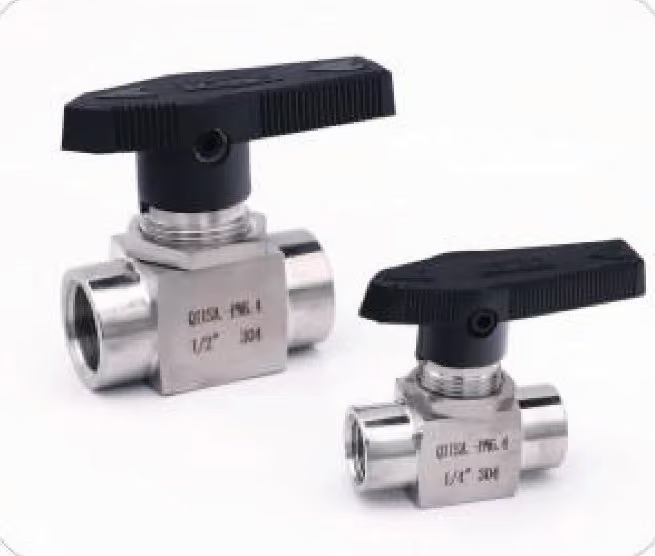
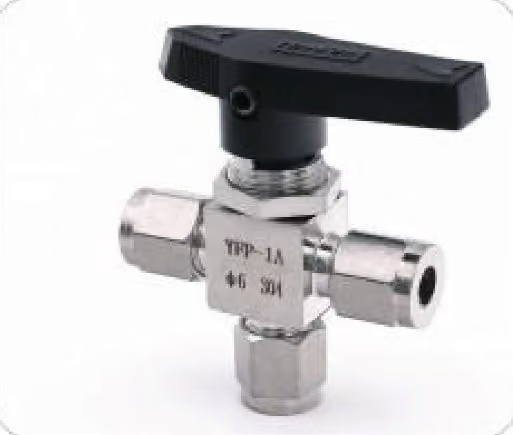
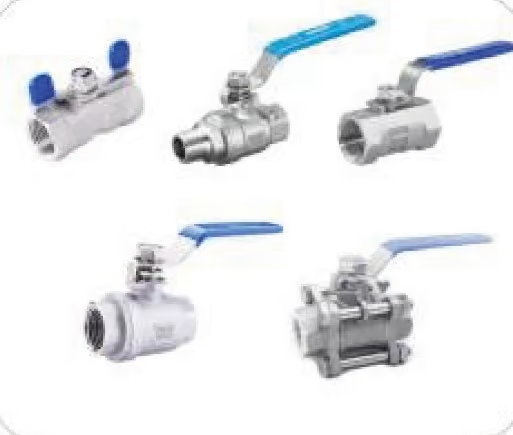
FerruleX manufactures stainless ball valves in SS304 / SS316 / SS316L — ball valve category, female threaded and investment cast bodies. Grade choice follows the chloride level, as above.
Our compression fitting line carries the same material-matching logic: brass ferrules on copper tube, stainless on stainless, per tube compatibility. The joint has to agree with the tube, not with the valve.
Send the media, water chemistry where relevant, pressure class and temperature, and we quote the material the duty deserves rather than the one on the shelf. Request a factory quote.
FAQ
Why do brass ball valves fail in some water systems? Dezincification: common brass is ~35% zinc, and in warm, stagnant, soft or chloride-bearing water the zinc leaches out, leaving a porous copper skeleton with no strength. Hot-water recirculation lines are the classic failure location. Susceptibility starts around 15% zinc.
Is a stainless steel ball valve always better than brass? No: better only where the duty demands it — chlorides, seawater, chemicals, food and pharma, heat, or regulated potable duty. In benign water and air inside the brass rating, brass performs identically for two to three times less money.
What temperature can brass and stainless ball valves take? Typical brass in the 600 WOG class runs to about 160–185 °C and derates steeply above it; typical stainless reaches roughly 220 °C and beyond. In both, the seat — usually PTFE — often sets the ceiling before the body does.
Can I use brass valves on seawater? Not ordinary brass — dezincification will consume it. Seawater and brackish service belong on 316 stainless, or on dezincification-resistant alloys and low-zinc bronzes where economics demand. Decide before the purchase order, not after the first failure.
What about potable water specifically? Benign chemistry: certified lead-free brass is the economical standard. Aggressive chemistry (warm, soft, low-alkalinity, high chloride): DZR brass or low-zinc bronze, code-mandated in many regions. Stainless is the compliance-safe choice for regulated or high-purity potable duty.