Valve packing is the ring set in the stuffing box that seals the stem against the process fluid. In VOC service that seal is a compliance surface, not a wear item to re-tighten when it weeps.
Specify three things: the packing material by temperature band, the emission standard and class together with its production test, and a live-loaded gland where the valve cycles. That is five lines on the RFQ, and the rest of this page is how to fill them in.
Key takeaways
- PTFE packing serves to about 200–260 °C with the lowest friction; graphite serves to roughly 450–650 °C class and takes the heat PTFE cannot.
- Live-loading — Belleville disc springs on the gland — holds packing preload as the set consolidates, and is the standard companion to high-cycle and low-emission service.
- ISO 15848-1 is the type test with tightness classes (methane classes AM/BM/CM at 50/100/500 ppmv; helium classes AH/BH/CH at 10⁻⁵/10⁻⁴/10⁻² mg·s⁻¹·m⁻¹); ISO 15848-2 is the production acceptance test.
- API 624 type-tests rising-stem graphite-packed valves (310 cycles, three thermal excursions to 260 °C, 100 ppm pass/fail); API 641 does the same family for quarter-turn at 610 cycles.
- TA-Luft’s 2021 revision points to ISO 15848-1 for valves; EPA Method 21 is screening, not certification.
Which packing do I need?
The two materials divide at temperature. That line is the first decision on the page, and it decides more than any other single line you will write.
PTFE packing — braid or V-ring sets — runs to about 200–260 °C in the catalogs. It carries the lowest friction of any engineering solid, which keeps stem torque down and suits control-valve duty.
Its stem-seal surface wants the finer finish: published guidance for polymer stem seals calls for about 0.4 µm Ra or better in the packing travel area.
Graphite is the heat answer. Flexible graphite rings serve the 450–650 °C class depending on atmosphere, at moderate-to-high friction, and tolerate a slightly rougher stem — around 0.4–0.8 µm Ra per the packing-standard guidance.
Neither is universally right. PTFE loses its corner above its class and can degrade with fumes near its ceiling; graphite costs torque and can consolidate.
| Packing choice | Temperature band | Friction and stem finish | What actually decides |
|---|---|---|---|
| PTFE, braid or V-ring sets | about 200–260 °C | lowest friction of any engineering solid; stem about 0.4 µm Ra or better | stem torque has to stay low — control-valve duty and stroke count |
| Flexible graphite rings | 450–650 °C class, depending on atmosphere | moderate-to-high friction; stem around 0.4–0.8 µm Ra | the temperature band alone; nothing above the PTFE ceiling has another answer |
The trim-side context for what the packing protects is in valve trim materials.
Do I need live-loading?
Packing is a wear item under preload, and preload is the whole seal. As the valve cycles, packing consolidates — even dense graphite sets can consolidate by a couple of percent over their life — and the stud-bolt stretch that clamped it relaxes.
Live-loading replaces that slack with a stack of Belleville disc springs on the gland follower. The stack’s deflection dwarfs the stud stretch, so the sealing load survives consolidation and thermal cycling.
Specify it where the service looks like this:
- high cycle counts
- thermal swings
- remote or unmonitored locations
- fugitive-emission performance that must hold between maintenance windows
Write it as a construction note — live-loaded gland — and the valve arrives with its preload spring built in.
Which emission standard do I quote?
Each name below answers a different question, and a quote that mixes them up is the common failure.
- ISO 15848-1 — the type test: a valve model is cycled and thermally exercised, then classified by measured tightness. Methane classes run AM, BM, CM at 50, 100 and 500 ppmv; helium classes run AH, BH, CH at 10⁻⁵, 10⁻⁴ and 10⁻² mg·s⁻¹·m⁻¹ of stem diameter. The two class families do not convert into each other — specify which medium your project quotes.
- ISO 15848-2 — the production acceptance test: the routine test each delivered valve passes. A type-tested design plus production-tested units is the full claim.
- API 624 — the rising-stem graphite-packed test: 310 mechanical cycles with three thermal excursions to 260 °C, methane at pressure, pass/fail at 100 ppm. API 641 is the quarter-turn sibling at 610 cycles.
- EPA Method 21 — the screening field test: a sniffer reading in ppm that locates and classifies leaks. It certifies nothing; the leak definition it tests against (commonly 500 or 10,000 ppm) comes from the regulation, not the method.
- TA-Luft — Germany’s clean-air rule; its 2021 revision references ISO 15848-1 for valve stem testing, replacing the older VDI 2440 basis.
How do I write it on the RFQ?
Copy these five lines onto the RFQ. Each one maps to a decision above, and each is checkable against the datasheet when the valve arrives.
packing material— PTFE or graphite, to the temperature band.live-loaded gland— yes, for cycling or thermal-swing service.emission standard and class— e.g.,ISO 15848-1, methane BM, orAPI 624 compliant.test documentation— type test certificate and per-unit production test, named.maintenance expectation— the cycle count and temperature swings that justify live-loading.
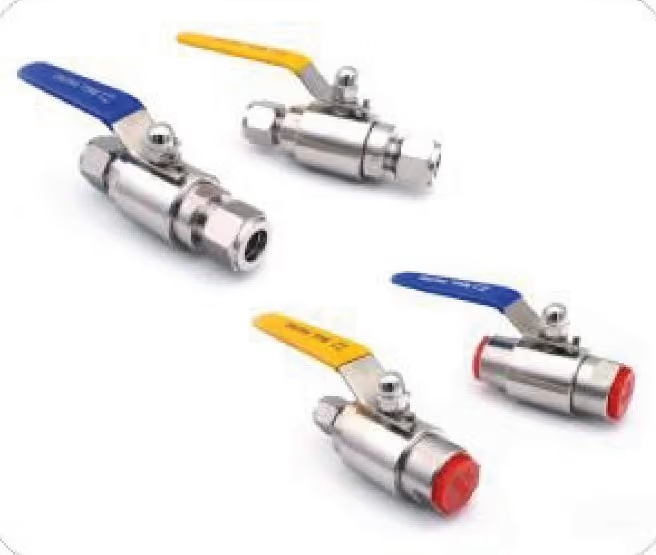
Our needle valves and ball valves quote packing as a line item. The isolation-side counterpart of this spec is the double-block-and-bleed pattern from double block and bleed valves.
My stem is leaking — what do I check first?
The gland, then the packing, then the stem, in that order. That is also the repair sequence, and skipping a step wastes the one after it.
- Step 1 — Isolate and depressurise. Close the line and vent it before any packing work. Under pressure the published default is no adjustment at all, and several makers state it as a flat prohibition.
- Step 2 — Tighten the gland follower evenly. Nuts go in a staggered cross pattern, about a quarter turn at a time. Uneven tightening distorts the gland; over-tightening crushes the packing and raises stem torque without sealing anything.
- Step 3 — Measure the result. If a measured re-tighten does not stop the weep, the packing is worn or consolidated and the fix is replacement, not more torque.
- Step 4 — Inspect the stem through the packing travel area. Scoring or pitting will cut fresh packing and the leak returns within weeks. The finish target follows the material — about 0.4 µm Ra or better for PTFE, around 0.4–0.8 µm Ra for graphite.
- Step 5 — Fit the new set. On cycling or thermal-swing service, pair it with a live-loaded gland so preload survives consolidation between adjustments.
Some makers do authorise minor in-service gland adjustment on specific designs. That permission lives in that maker’s manual for that valve; there is no general low-pressure exemption, and the documented hazards are real — the leak path can enlarge abruptly, and hot or injected fluid causes burns and worse.
| Symptom | Most likely cause | What to change |
|---|---|---|
| Weep returns soon after an even re-tighten | packing worn or consolidated | fit a new set; further torque only crushes it |
| Fresh packing cut through within weeks | stem scored or pitted over the packing travel area | repair or replace the stem before fitting rings |
| Gland visibly distorted, stem torque high, still weeping | nuts tightened unevenly or over-tightened | re-set the follower evenly, staggered cross pattern, a quarter turn at a time |
| Preload gone between outages on a cycling valve | consolidation plus stud-bolt relaxation, with no spring in the gland | specify a live-loaded gland with a Belleville stack |
| Leak path opens abruptly during gland work | the adjustment was made with the line pressurised | isolate and depressurise; monitor and plan the outage |
| Datasheet class does not match the project test | methane and helium class families do not convert | quote the medium the project specifies |
If the weep is tolerable and the line cannot be isolated, monitor it and plan the outage. Live-loading exists precisely so preload survives between adjustments.
FAQ
Does graphite packing need live-loading?
Not to function. Non-live-loaded graphite is normal practice where the valve can be monitored and re-tightened. It earns its cost on high cycle counts, thermal swings and low-emission duty.
What is the difference between ISO 15848-1 and ISO 15848-2?
Part 1 type-tests a valve design and assigns its tightness class under cycling and thermal excursions. Part 2 is the production acceptance test each delivered valve passes. A credible claim needs both; the class belongs to the design.
Is EPA Method 21 a certification?
No. It is a screening procedure: a portable instrument sniffs for VOCs at the stem and reports a reading. The leak definition it is judged against — commonly 500 or 10,000 ppm — comes from the regulation.
PTFE or graphite packing for my temperature?
Under roughly 200–260 °C, PTFE serves with the lowest friction and the finest stem finish. From there through the 450–650 °C class, graphite is the material, with the torque and consolidation that come with it.
What changed under TA-Luft 2021?
For valves, the 2021 revision moved the stem-seal test basis from the older VDI 2440 guidance to ISO 15848-1, with its own tightness limits layered on top. A valve for German VOC service should quote that classification.
My valve leaks around the stem — what should I check first?
The gland, then the packing, then the stem. A measured re-tighten that does not stop the weep means replacement, not more torque. Check the stem for scoring before new rings go in.
Can I tighten the packing while the line is pressurized?
The published default is no: isolate and depressurise first, and several makers state it as a flat prohibition. A maker may authorise minor in-service adjustment on specific designs; that permission is in their manual.