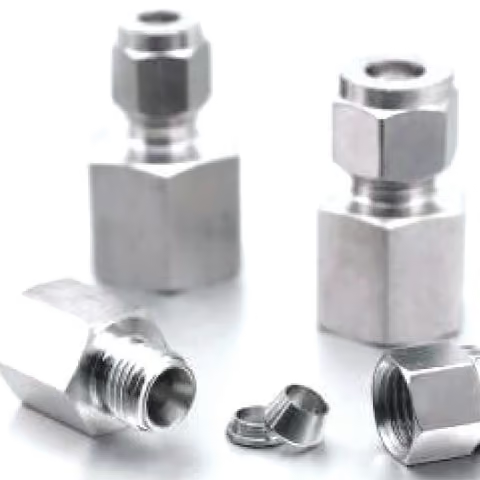
Compression Tube to Female Connector — Sizes & Specs
Compression Tube to Female Connector: stainless steel compression fittings, double ferrule to female thread. FerruleX RFQ. Stocked sizes ship fast.
- Brand
- FerruleX
- Material
- SS316 / SS316L / SS304
- Tube OD
- 3–25 mm / 1/8"–1"
- Female threads
- NPT / G / Metric
- Pressure
- 1000 psi standard / 4500 psi high-pressure
- Stock5–7 days after confirmation
- Make to order15–25 days production
- Payment / termsT/T ~30% or L/C · FOB Shanghai / Ningbo
- OEMLogo and drawings accepted · price on RFQ
Description
Three parts make the joint: body, ferrule, nut. The ferrule slides over the tube, the nut drives it forward, its outer face seats on the body cone and its inner edge bites the tube wall to seal. The threaded end is female: ZG (R), NPT, G or M, M5 up to M24 and 1/8 to 1 inch, with tube from 3 to 25 mm OD or 1/8 to 1 inch. Bodies in 316, 316L or 304 stainless, for liquid or gas. Allowable pressure tracks wall thickness: 10 mm by 1 mm tube is listed at 24 MPa, 1/4 inch by 0.035 inch at 5100 psi, and the fitting is designed above 1.2 times its tube.
Body, ferrule, nut, female port. Thread form decides make-up: ZG (R), NPT, G and M are supplied between 1/8 and 1 inch, and a mixed family on one manifold drawing will not assemble. Quote tube OD and thread callout together, since the body is machined for both. Pressure class follows tube wall, so a wall change re-rates the joint.
- Anatomy
- Body, ferrule and nut close onto the tube to form the seal.
- Threads
- Female end threads in ZG (R), NPT, G or M, from M5 to M24.
- Pressure
- Allowable pressure follows wall thickness, with 10 mm by 1 mm tube listed at 24 MPa.
- Tube seating
- Fully annealed tube below HRB90, pushed to the bottom of the fitting.
Specifications
| Specification | Value |
|---|---|
| Brand | FerruleX |
| Material | SS316 / SS316L / SS304 |
| Tube OD | 3–25 mm / 1/8"–1" |
| Female threads | NPT / G / Metric |
| Pressure | 1000 psi standard / 4500 psi high-pressure |
Request Quote
Prices stay on the RFQ. Send size, material, quantity and destination — the factory replies with price, lead time and packing. Packing, payment and the usual quote questions are on thedelivery pageand the FAQ.
Questions about this part
How should the tube be cut and deburred before assembly?
Cut the tube square with a wheel cutter or fine saw, then deburr inside and out. A burr or an out-of-square end holds the ferrule off its seat, and the joint leaks no matter how far the nut is driven.
How far should the tube enter the body?
Push the tube to the bottom of the body, against the internal shoulder, before tightening. A tube that stops short leaves the ferrule biting where the body cone cannot support it, and the joint will not hold pressure.
Should the nut be tightened to torque or by counting turns?
Tighten by hand until the ferrule grips, then apply the specified torque with a wrench held on the body flats. Counting turns instead of using a torque wrench overdrives small sizes and collapses the ferrule.
Can the joint be remade, or must the ferrules be replaced?
A joint can be remade after the nut has been backed off, provided the ferrule and tube end are undamaged and the nut returns to its original position. Fit new ferrules only when the tube has been cut back.
Does a vibrating line need tube support close to the fitting?
Where the line vibrates, clamp the tube within a short distance of the nut so movement is taken by the support and not by the ferrule. Repeated flexing at the bite is what starts a fatigue leak.
After assembly there is a leak: is it the tube end or the female thread?
Dry the joint and watch where liquid reappears. A weep at the tube nut means the ferrule or tube end is at fault, while a weep at the female thread points to thread form or seal washer.
Related products
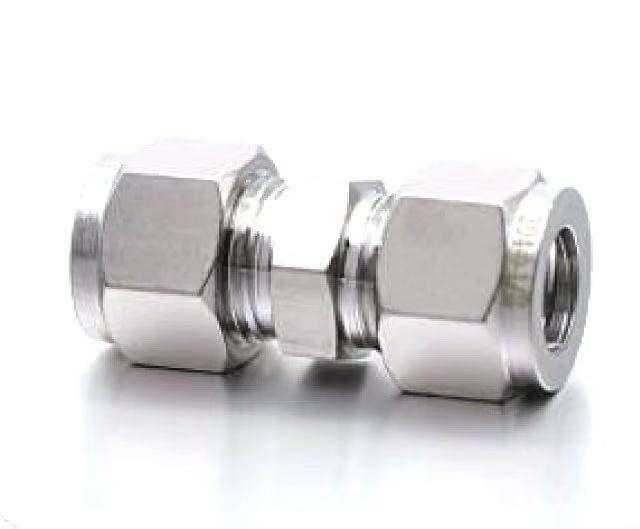
Compression Straight Union, 316L, NPT Threads
Compression Straight Union: stainless steel compression fittings, equal tube-to-tube double ferrule. FerruleX factory RFQ. Stocked sizes ship fast.
View details →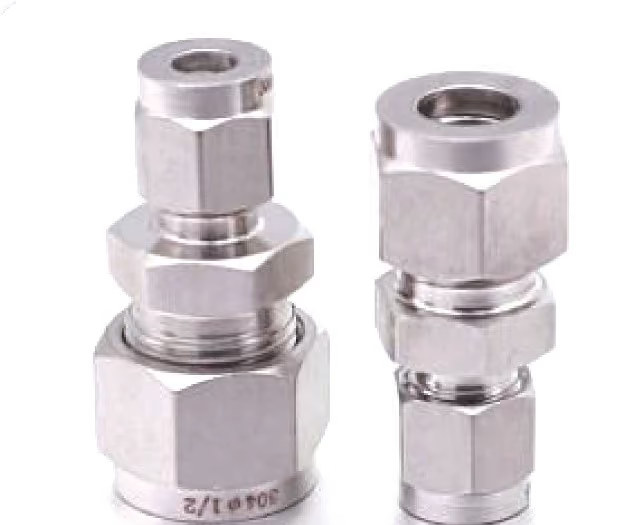
Compression Reducing Union — 316L, Many Sizes
Compression Reducing Union: stainless steel compression fittings joining unequal tube OD. SS316/304. FerruleX RFQ. Stocked sizes ship fast. Fast stock shipping.
View details →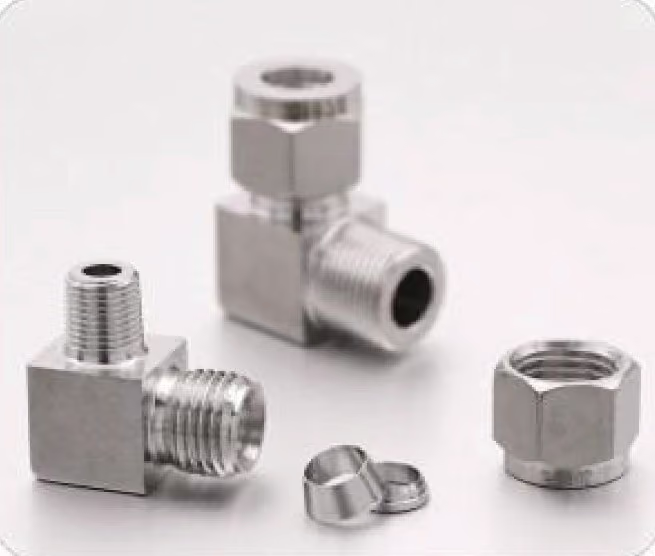
Compression Male Elbow Connector
Compression Male Elbow Connector: 90° stainless steel compression fittings, tube to male thread. FerruleX RFQ. Stocked sizes ship fast. Fast stock shipping.
View details →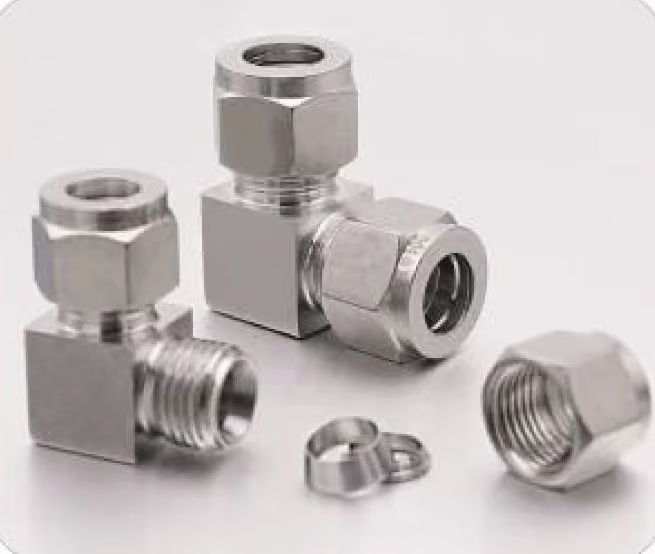
Compression Union Elbow
Compression Union Elbow: 90° stainless steel compression fittings, tube-to-tube double ferrule. FerruleX RFQ. Stocked sizes ship fast. Fast stock shipping.
View details →