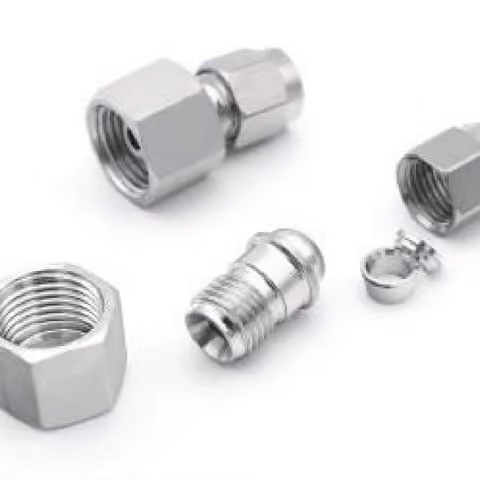
Stainless Steel Cylinder Connector — Sizes & Specs
Cylinder Connector: compact stainless instrumentation fitting for cylinder and specialty ports. SS316/304. FerruleX RFQ. Stocked sizes ship fast.
- Brand
- FerruleX
- Material
- SS316 / SS316L / SS304
- Series
- Compression instrumentation
- Type
- Cylinder connector
- Order mode
- Factory RFQ
- Stock5–7 days after confirmation
- Make to order15–25 days production
- Payment / termsT/T ~30% or L/C · FOB Shanghai / Ningbo
- OEMLogo and drawings accepted · price on RFQ
Description
Steel cylinder valve outlets and manifold take-offs expect a particular nose, so the body is cut to the port rather than to a nominal tube size. Bodies come in 316, 316L and 304 stainless; the tube side takes a ferrule joint or a thread, and the port side carries M5 to M24 in ZG(R), NPT, G or M form, 1/8 in to 1 in. Tube range is 3 mm to 25 mm OD. Service media are liquid and gas. Standard bodies are rated around 1000 PSI, high-pressure versions up to 4500 PSI. Send the valve outlet drawing with thread form, seat depth and any undercut marked, since those three decide the blank.
Two joints sit in one small body: a ferrule end that bites the tube wall and a threaded end that seats against the valve outlet. Copper is offered for lower-duty lines. Thread form, alloy and pressure class are fixed together, standard at 1000 PSI or 4500 PSI in the high-pressure build.
- Joint
- Ferrule or threaded connection at the tube end.
- Range
- 3 mm to 25 mm tube OD, M5 to M24 port thread.
- Threads
- ZG(R), NPT, G or M form on the port end.
- Pressure
- Standard bodies around 1000 PSI, high-pressure builds to 4500 PSI.
Specifications
| Specification | Value |
|---|---|
| Brand | FerruleX |
| Material | SS316 / SS316L / SS304 |
| Series | Compression instrumentation |
| Type | Cylinder connector |
| Order mode | Factory RFQ |
Request Quote
Prices stay on the RFQ. Send size, material, quantity and destination — the factory replies with price, lead time and packing. Packing, payment and the usual quote questions are on thedelivery pageand the FAQ.
Questions about this part
How far does the tube go into the body?
Push the tube in until it seats against the shoulder inside the body, then hold it there while the nut is made up. Marking the tube at the shoulder makes the depth visible on later inspections.
Should I tighten by torque or by turns?
Make the nut up by hand first, then bring it to the specified torque with a wrench, holding the body so it cannot rotate. Turns alone are a field guide only; the torque figure belongs to the fitting size.
How square and clean must the tube end be?
Cut the tube square and deburr both the outside edge and the bore before assembly, then wipe it clean. A burr or an out-of-square end pushes the ferrule off line and the joint will not seal.
Can the joint be remade with the same ferrules?
A joint that has been made up once can be remade, but fit a new ferrule if the old one was over-tightened or the tube was disturbed. Reuse only where the bite is still clean and full.
The joint weeps — is it the tube end or the port end?
A leak at the tube joint comes from the ferrule bite or an under-tightened nut; a leak at the port end comes from the thread seal or a damaged seat. Isolate with a dry tissue before disturbing either.
Is the pressure rating limited by the tube wall?
The 1000 PSI and 4500 PSI figures apply to the body; the tube side is limited by its own wall thickness, and both fall as temperature rises. State working pressure and temperature with the enquiry.
Related products
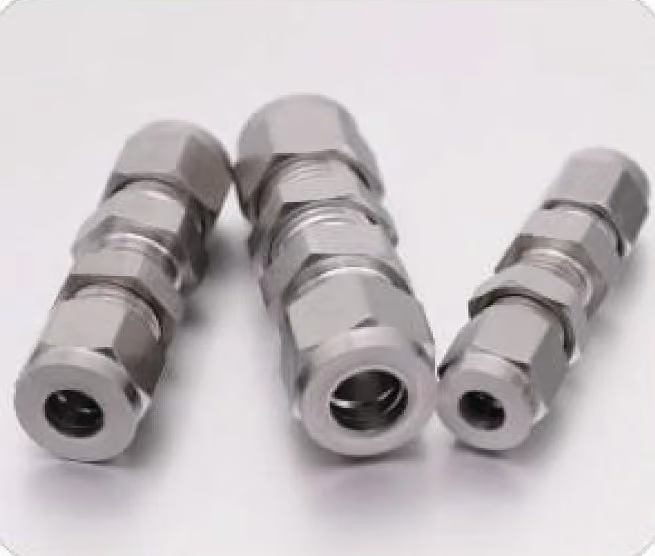
Stainless Steel Compression Bulkhead Union — Sizes
Compression Bulkhead Union: panel-pass stainless steel compression fittings, double ferrule. SS316/304. FerruleX RFQ. Stocked sizes ship fast. OEM RFQ welcome.
View details →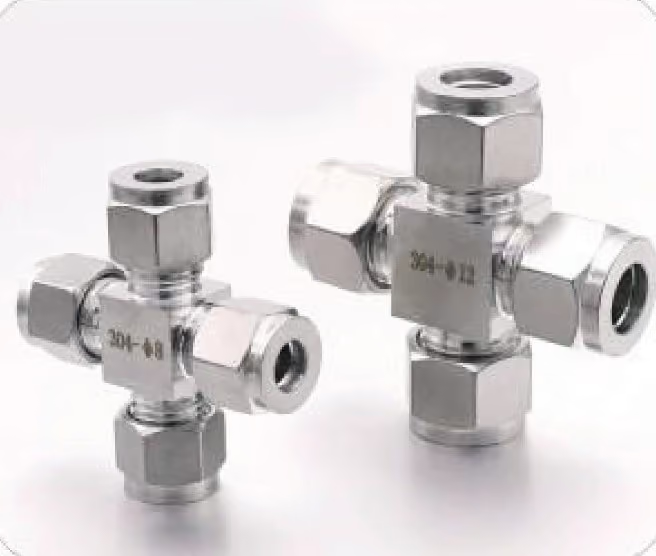
Compression Cross Fitting
Compression Cross Fitting: four-port stainless steel compression fittings for intersecting lines. FerruleX RFQ. Stocked sizes ship fast. Fast stock shipping.
View details →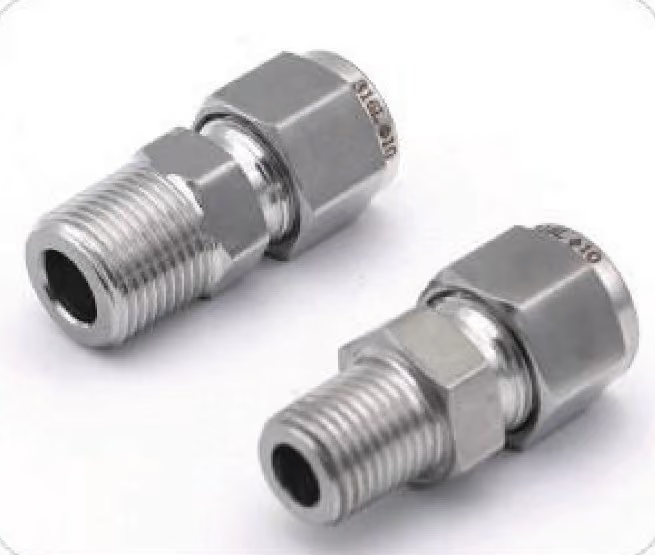
Ground Finish Tube to Male Connector
Ground Finish Tube to Male Connector: refined stainless steel compression fittings, tube to male. FerruleX RFQ. Stocked sizes ship fast. Fast stock shipping.
View details →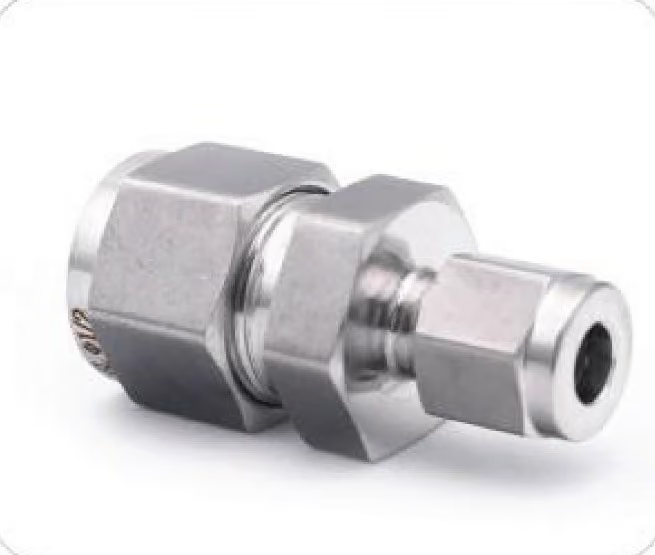
Ground Finish Reducing Union
Ground Finish Reducing Union: polished-look stainless steel compression fittings, unequal OD. FerruleX RFQ. Stocked sizes ship fast. Export RFQ only — no cart.
View details →