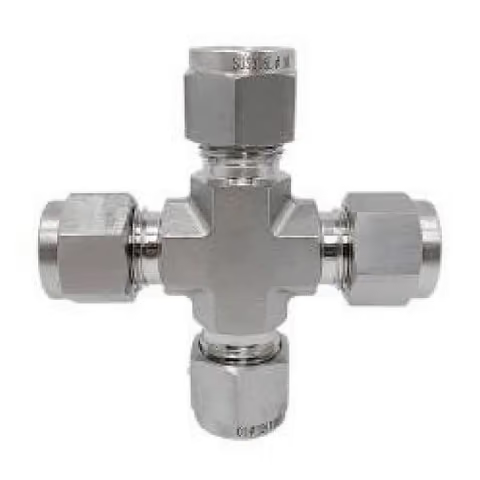
Forged Compression Cross Fitting
Forged Compression Cross Fitting: forged four-port stainless steel compression fittings. SS316/304. FerruleX RFQ. Stocked sizes ship fast. Fast stock shipping.
- Brand
- FerruleX
- Material
- SS316 / SS316L / SS304
- Tube OD
- 3–5 mm / 1/8"–1/2"
- Body
- Forged
- Type
- Compression cross
- Stock5–7 days after confirmation
- Make to order15–25 days production
- Payment / termsT/T ~30% or L/C · FOB Shanghai / Ningbo
- OEMLogo and drawings accepted · price on RFQ
Description
Four ferrule joints share a single forging, and each one seals by deforming its own ferrule onto the tube rather than by a gasket. The nut pushes the ferrule front onto the body cone as its inner edge bites the tube surface, so the tube end must reach the port bottom. Bodies are 316, 316L or 304 stainless, with copper on request. Media are liquid or gas, service sits between -40 and 150 °C, and a high-temperature variant takes the joint past 230 °C. Standard bodies run near 1000 psi; the high-pressure build tops out around 4500 psi. Wall selection follows the maker table for the chosen OD, per GB50316 and ASME B31.
Port layout decides most of the job on a four-way body: equal or reducing, and which pair faces which. Reducing ports set opposite each other keep the two flow paths symmetrical. Every tube end must bottom in its port, and score marks at the ferrule seat are the usual cause of a weeping joint.
- Seal
- Nut-driven ferrule whose front seats on the body cone and whose inner edge bites the tube.
- Body
- Die-forged four-port blank in 316, 316L or 304 stainless, with copper on request.
- Class
- Standard bodies sit near 1000 psi; the high-pressure build reaches about 4500 psi.
- Media
- Liquid or gas, -40 to 150 °C, with a high-temperature variant above 230 °C.
Specifications
| Specification | Value |
|---|---|
| Brand | FerruleX |
| Material | SS316 / SS316L / SS304 |
| Tube OD | 3–5 mm / 1/8"–1/2" |
| Body | Forged |
| Type | Compression cross |
Request Quote
Prices stay on the RFQ. Send size, material, quantity and destination — the factory replies with price, lead time and packing. Packing, payment and the usual quote questions are on thedelivery pageand the FAQ.
Questions about this part
How should the tube end be prepared before it enters a cross port?
Cut the tube square and deburr the outside edge and the bore. A burr or an angled cut makes the ferrule ride on a high spot, so the bite is uneven on that port.
How far does the tube have to go into the port?
Push the tube fully home so the end rests on the port bottom before the nut is turned. A tube stopped above the bottom leaves the ferrule biting an unsupported section, and gas finds that gap. Check the depth on all four ports.
Is the nut set by torque or by counting turns?
Follow the maker torque figure for the tube OD; turns are only a guide because thread friction varies between assemblies. Tighten until the ferrule is felt to seat, then take it to the stated figure. Snug is not a setting.
What causes a weep at one port straight after assembly?
A weep at once usually means the tube stopped short, the cut was not square, or the ferrule was not seated on the cone. Take that port apart and inspect the bite before tightening anything further.
Can a joint be remade with the same ferrule?
A ferrule that has already bitten the tube is deformed, so a remake wants a fresh ferrule and the nut pulled down again on the new one. Reusing the old ferrule on a disturbed tube is where repeat leaks start.
Does the body rating cover the whole assembly?
No. The body class is only one part; the tube wall and the service temperature decide what the joint actually holds, and a thin wall pulls the assembly well below the body figure. Wall selection follows the maker table for the chosen OD.
Related products
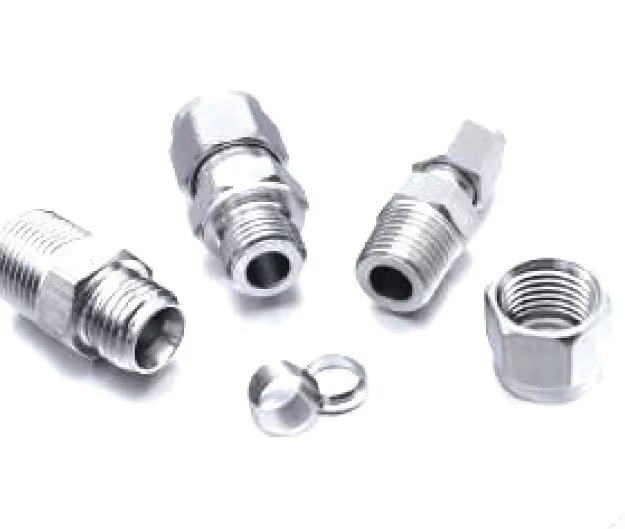
Compression Tube to Male Connector
Compression Tube to Male Connector: stainless steel compression fittings, double ferrule, SS316/304, NPT/G. FerruleX RFQ. Stocked sizes ship fast.
View details →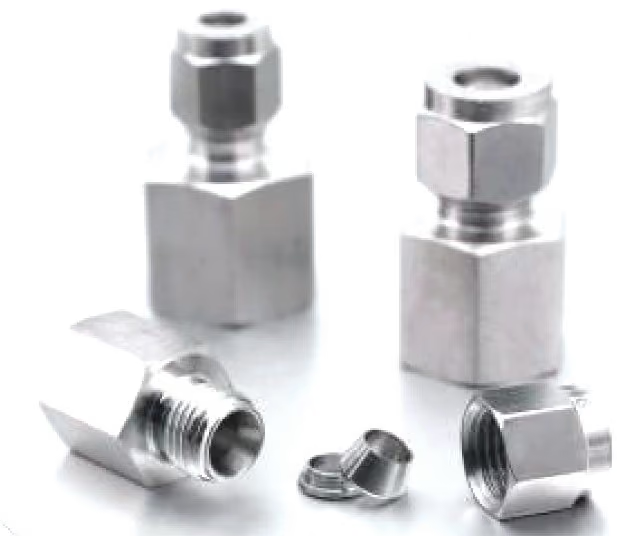
Compression Tube to Female Connector — Sizes & Specs
Compression Tube to Female Connector: stainless steel compression fittings, double ferrule to female thread. FerruleX RFQ. Stocked sizes ship fast.
View details →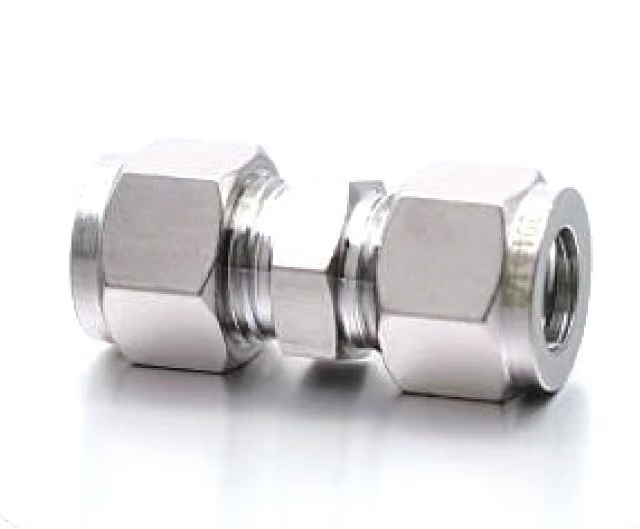
Compression Straight Union, 316L, NPT Threads
Compression Straight Union: stainless steel compression fittings, equal tube-to-tube double ferrule. FerruleX factory RFQ. Stocked sizes ship fast.
View details →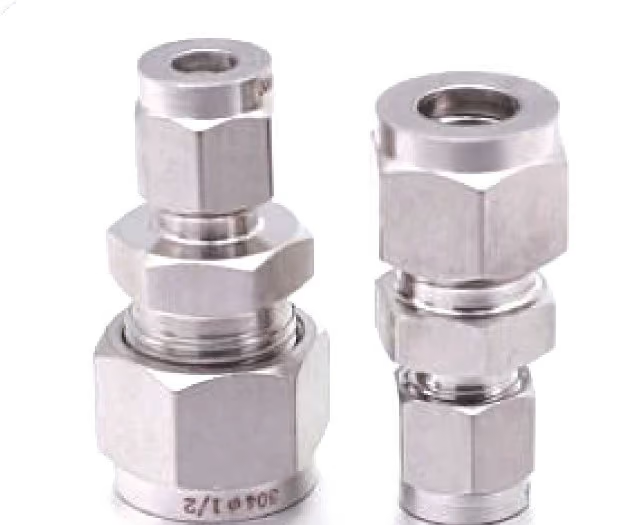
Compression Reducing Union — 316L, Many Sizes
Compression Reducing Union: stainless steel compression fittings joining unequal tube OD. SS316/304. FerruleX RFQ. Stocked sizes ship fast. Fast stock shipping.
View details →