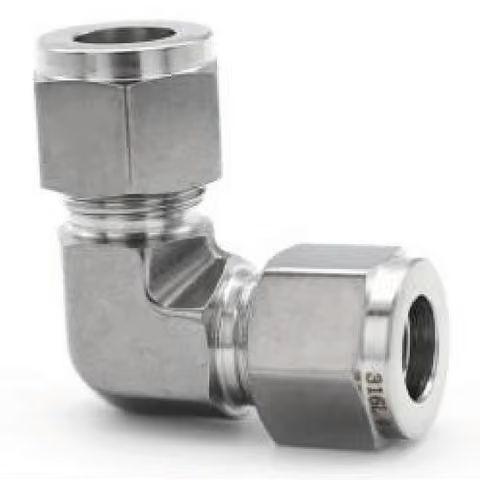
Stainless Steel Forged Compression Elbow — Types
Forged Compression Elbow: forged-body stainless steel compression fittings for vibrating service. FerruleX RFQ. Stocked sizes ship fast. Fast stock shipping.
- Brand
- FerruleX
- Material
- SS316 / SS316L / SS304
- Tube OD
- 3–25 mm / 1/8"–1"
- Body
- Forged
- Pressure
- ~1000 PSI (HP series available)
- Stock5–7 days after confirmation
- Make to order15–25 days production
- Payment / termsT/T ~30% or L/C · FOB Shanghai / Ningbo
- OEMLogo and drawings accepted · price on RFQ
Description
Die closure, not bar stock, is the difference here: the blank arrives with the 90° turn already formed, and the ferrule ends are then finished from it. Bodies come in 316, 316L or 304 stainless, with copper listed among the optional materials. Both ends are ferrule, so no thread is involved; bright tube and hard tube both seat at 3–25 mm, or 1/8 in to 1 in. Liquid and gas service. Working pressure is about 1000 PSI on the standard version and about 4500 PSI on the high-pressure version, across -40 to 150 °C, with a temperature coefficient above that. Petrochemical, shipbuilding, automotive, food-processing and pharmaceutical lines are the usual applications.
A ferrule joint demounts without cutting tube, which matters on skid builds that get re-piped. Keep at least 10 mm of straight tube beyond each nut, on both legs. For service above 230 °C (450 °F), specify the high-temperature variant instead of the standard part.
- Forging
- Body closed in a die rather than cut from bar.
- Sizes
- Ferrule ends take 3–25 mm and 1/8 in to 1 in tube.
- Alloys
- 316, 316L and 304 stainless, with copper optional.
- Pressure
- About 1000 PSI standard, about 4500 PSI high-pressure.
Specifications
| Specification | Value |
|---|---|
| Brand | FerruleX |
| Material | SS316 / SS316L / SS304 |
| Tube OD | 3–25 mm / 1/8"–1" |
| Body | Forged |
| Pressure | ~1000 PSI (HP series available) |
Request Quote
Prices stay on the RFQ. Send size, material, quantity and destination — the factory replies with price, lead time and packing. Packing, payment and the usual quote questions are on thedelivery pageand the FAQ.
Questions about this part
How should the tube be cut and deburred before assembly?
Cut with a tube cutter or fine saw and square the end, then deburr inside and out. Do not chamfer the outside diameter, because the ferrule must bite a full wall. Wipe the tube clean before insertion.
How far does the tube go into the elbow?
Push the tube in until it stops against the body shoulder, then hold it there while the nut is run down by hand. The tube must stay seated at the shoulder through tightening, with no pull-back.
Do I tighten the nut to a torque figure or by counting turns?
Follow the maker turn count for the size, from finger-tight, and stop there. A torque wrench is only a cross-check, because friction varies with lubrication and thread finish. Overtightening crushes the ferrule and shortens joint life.
Can the joint be remade, and do the ferrules need replacing?
The joint can be taken apart and remade on the same tube, but fit a new ferrule each time. A used ferrule has already been deformed to one tube diameter and will not seal reliably on a second make-up.
What tube support does vibrating service need?
Support the tube close to each nut and keep at least 10 mm of straight tube beyond the nut on both legs. Clamp the run so the elbow carries no bending load from the pipework.
The joint weeps straight after assembly. What should I check?
Check insertion first: a tube that stopped short of the shoulder will pass a leak test and then weep. Then look for a score or burr on the tube at the ferrule line, and a ferrule seated off square.
Related products
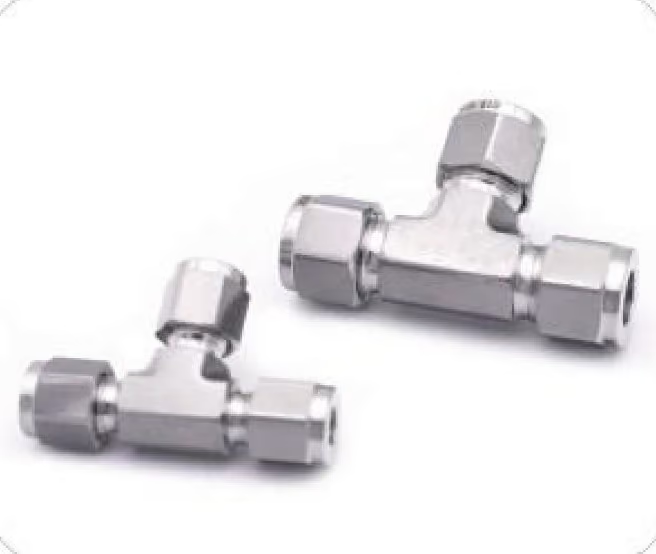
Stainless Steel Forged Compression Tee — Types
Forged Compression Tee: forged stainless steel compression fittings for three-port branching. FerruleX RFQ. Stocked sizes ship fast. Export RFQ only — no cart.
View details →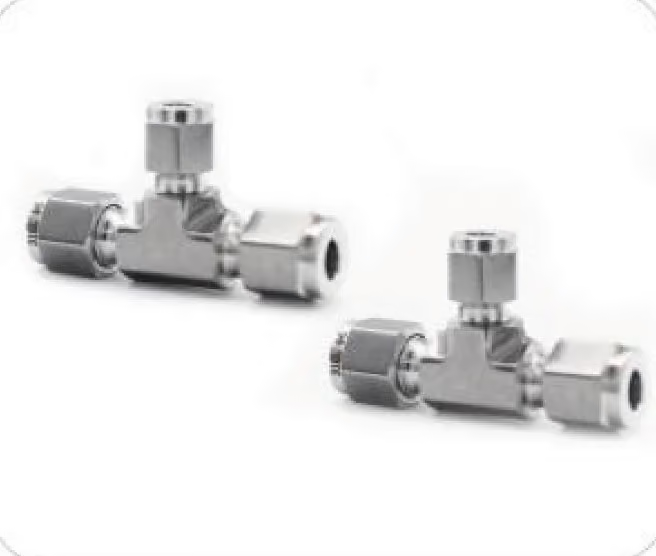
Forged Compression Reducing Tee — Sizes & Specs
Forged Compression Reducing Tee: forged stainless steel compression fittings, unequal branch. FerruleX RFQ. Stocked sizes ship fast. Export RFQ only — no cart.
View details →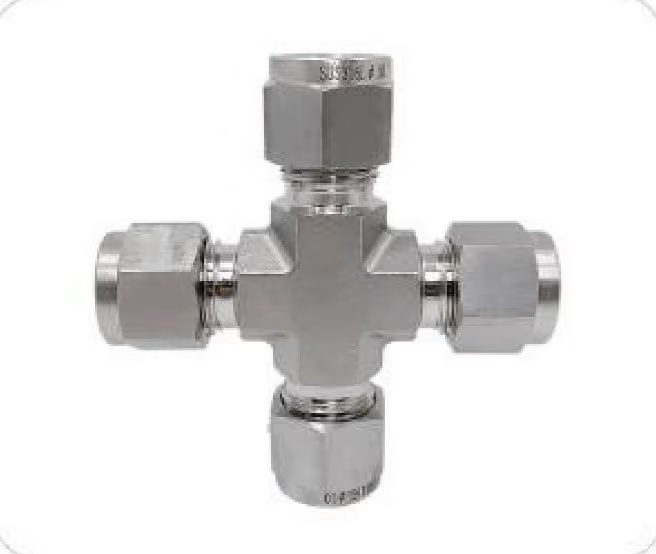
Forged Compression Cross Fitting
Forged Compression Cross Fitting: forged four-port stainless steel compression fittings. SS316/304. FerruleX RFQ. Stocked sizes ship fast. Fast stock shipping.
View details →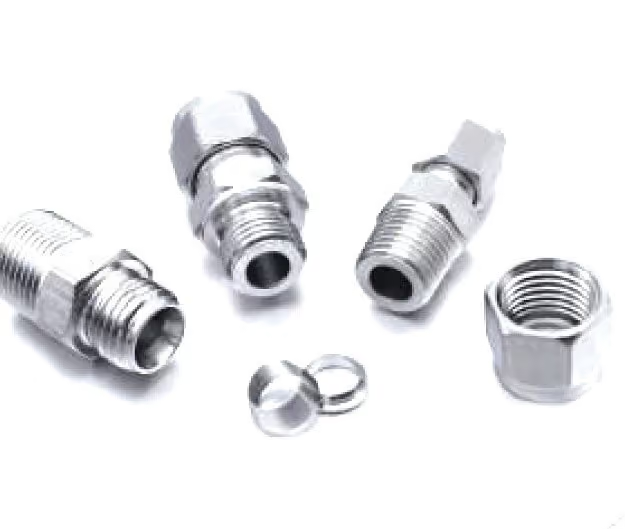
Compression Tube to Male Connector
Compression Tube to Male Connector: stainless steel compression fittings, double ferrule, SS316/304, NPT/G. FerruleX RFQ. Stocked sizes ship fast.
View details →