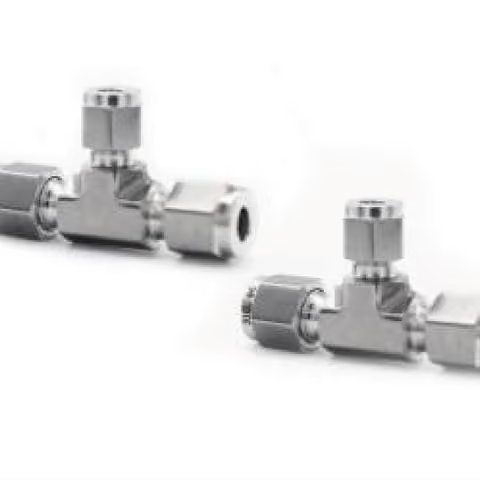
Forged Compression Reducing Tee — Sizes & Specs
Forged Compression Reducing Tee: forged stainless steel compression fittings, unequal branch. FerruleX RFQ. Stocked sizes ship fast. Export RFQ only — no cart.
- Brand
- FerruleX
- Material
- SS316 / SS316L / SS304
- Size range
- OD 3–5 mm / 1/8"–1/2"
- Body
- Forged
- Type
- Reducing tee
- Stock5–7 days after confirmation
- Make to order15–25 days production
- Payment / termsT/T ~30% or L/C · FOB Shanghai / Ningbo
- OEMLogo and drawings accepted · price on RFQ
Description
The forging is the reason this variant exists: one die-forged blank carries a full-OD run and a smaller branch outlet, so the header takes no welded stub. Ferrule connection serves bright tube or hard tube at all three ends, and every port makes up on its own nut and ferrule. Body materials listed are 316, 316L and 304 stainless; liquid and gas are the listed media. Pressure is quoted as a standard class around 1000 psi, with a high-pressure class reaching about 4500 psi. Plant types named for the series are energy and environmental, automotive and shipbuilding, petrochemical, construction, food processing and pharmaceutical. Send run OD and branch OD as two values on the order.
Treat a reducing tee as two joints in one body: the run and the branch carry different tube sizes, so support the smaller leg on its own. Give both OD values on one order line, and mark which run port faces supply and which faces the gauge.
- Body
- One die-forged blank carries the run and the stepped branch.
- Ends
- Ferrule connection at all three ports, for bright or hard tube.
- Class
- Standard bodies sit around 1000 psi; the high-pressure build reaches about 4500 psi.
- Media
- Liquid and gas are listed for the series.
Specifications
| Specification | Value |
|---|---|
| Brand | FerruleX |
| Material | SS316 / SS316L / SS304 |
| Size range | OD 3–5 mm / 1/8"–1/2" |
| Body | Forged |
| Type | Reducing tee |
Request Quote
Prices stay on the RFQ. Send size, material, quantity and destination — the factory replies with price, lead time and packing. Packing, payment and the usual quote questions are on thedelivery pageand the FAQ.
Questions about this part
How should the tube be prepared before make-up?
Cut the tube square and deburr both the outside and the bore, then wipe it clean. A burr or a slanted cut holds the ferrule off its seat and shows up later as a weep at that port.
How deep does the tube go into each port?
Push it in until it stops against the shoulder, then pull back only if the instruction says so. On a reducing tee check the branch separately, because the smaller port bottoms at a different depth from the run.
Is the nut set by torque or by counting turns?
Count turns from finger-tight rather than chasing a torque figure. The ferrule has to be driven into the tube, and a wrench that slips or a torque value read off a table tells you nothing about that seating.
It weeps right after assembly. Which port do I check first?
Find the leaking port before touching anything: run and branch are separate joints on one body, so each has its own ferrule and nut. A weep at the branch is not evidence about the run ends.
Can a joint be remade, and do the ferrules have to be replaced?
The ferrule is crimped onto the tube once, so a remade joint wants a fresh ferrule and a clean tube end. This tee takes two ferrule sizes, so keep the run and branch sets apart during the rebuild.
Does the branch need its own support under vibration?
Yes. The run and branch are different tube sizes, so the smaller leg carries its own load and should be supported independently. Clamp both legs close to the tee rather than relying on the branch tube to hang free.
Related products
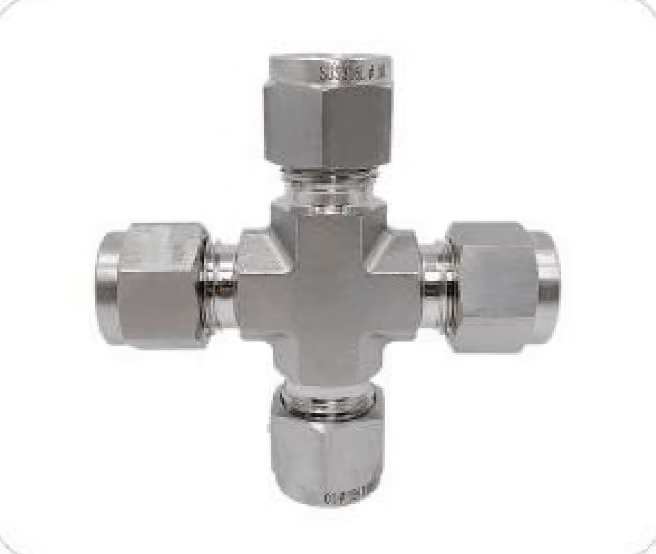
Forged Compression Cross Fitting
Forged Compression Cross Fitting: forged four-port stainless steel compression fittings. SS316/304. FerruleX RFQ. Stocked sizes ship fast. Fast stock shipping.
View details →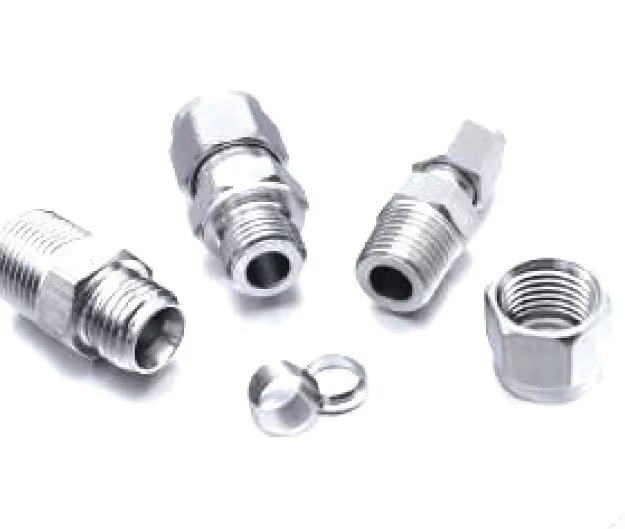
Compression Tube to Male Connector
Compression Tube to Male Connector: stainless steel compression fittings, double ferrule, SS316/304, NPT/G. FerruleX RFQ. Stocked sizes ship fast.
View details →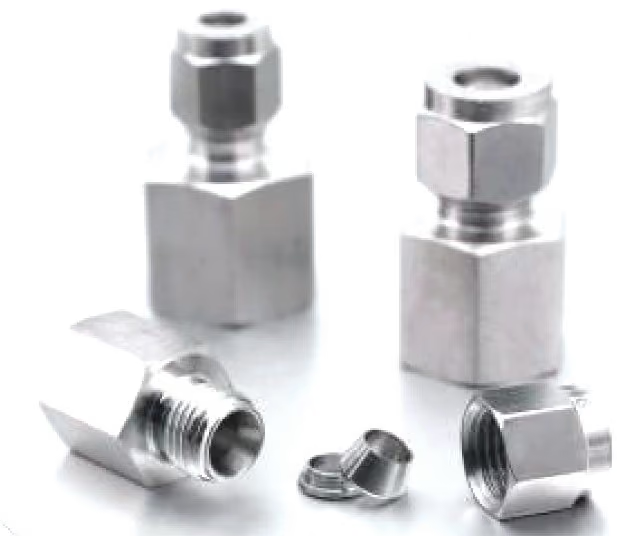
Compression Tube to Female Connector — Sizes & Specs
Compression Tube to Female Connector: stainless steel compression fittings, double ferrule to female thread. FerruleX RFQ. Stocked sizes ship fast.
View details →
Compression Straight Union, 316L, NPT Threads
Compression Straight Union: stainless steel compression fittings, equal tube-to-tube double ferrule. FerruleX factory RFQ. Stocked sizes ship fast.
View details →