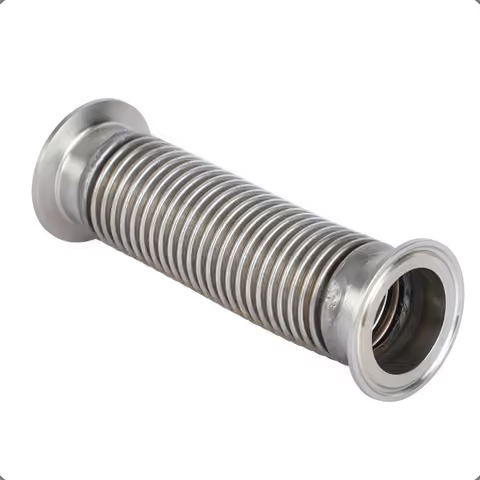
SS Tri-Clamp Corrugated Hose — Types, Sizes & Specs
SS Tri-Clamp Corrugated Hose: sanitary corrugated stainless steel hose, SS304/SS316, Φ6–Φ100. FerruleX factory RFQ. Stocked sizes ship fast. OEM RFQ welcome.
- Brand
- FerruleX
- Material
- SS304 / SS316
- Hose OD
- Φ6–Φ100
- Ends
- Tri-clamp
- Industry
- Sanitary / clean process
- Stock5–7 days after confirmation
- Make to order15–25 days production
- Payment / termsT/T ~30% or L/C · FOB Shanghai / Ningbo
- OEMLogo and drawings accepted · price on RFQ
Description
Available bores are Φ6, Φ8, Φ10, Φ13, Φ16, Φ20, Φ25, Φ32, Φ38, Φ51, Φ64, Φ75 and Φ100, in 304 or 316 stainless, each end fitted with a clamp ferrule. The bellows absorbs movement and misalignment in building services, power and heat-supply piping, petrochemical and smelting plant, aerospace and machinery, and in automation instrument signal tubing where rigid tube would pass vibration into the instrument. It also serves as protective conduit for instrument wiring, sensor leads, precision optical scale cable and electrical lines. Bores and lengths outside that list are non-standard builds to drawing. Give ferrule size, hose bore, free length and media on the RFQ; alloy and end preparation are confirmed against your sketch.
Clamp-ended hose suits runs that get broken for inspection instead of being left in place. Match the ferrule to the clamp already in your stores rather than to the hose bore. Sizes run Φ6 to Φ100 in 304 or 316; anything outside the list is a non-standard build to drawing, so include length and media.
- Bore range
- Thirteen stocked bores from Φ6 to Φ100.
- Alloys
- 304 or 316 stainless, or a non-standard build to drawing.
- Ferrule ends
- One clamp ferrule on each end, matched to the clamp in service.
- Duty
- Heat-supply and petrochemical runs, instrument tubing and cable protection.
Specifications
| Specification | Value |
|---|---|
| Brand | FerruleX |
| Material | SS304 / SS316 |
| Hose OD | Φ6–Φ100 |
| Ends | Tri-clamp |
| Industry | Sanitary / clean process |
Request Quote
Prices stay on the RFQ. Send size, material, quantity and destination — the factory replies with price, lead time and packing. Packing, payment and the usual quote questions are on thedelivery pageand the FAQ.
Questions about this part
Can the hose ends match clamps already in our stores?
Yes, the ferrule is selected against the clamp size you already run, not against the hose bore. State both clamp size and bore on the RFQ so the ends are prepared to suit.
What movement can the bellows absorb?
Axial, lateral and angular movement are all taken by the corrugation, in any combination the run imposes. Give the expected movement in each direction so the free length can be set to carry it.
How do I size length and bend radius for an offset?
Free length must exceed the offset, and the bend radius must stay inside what the bore tolerates, so a short hose cannot bridge a large step. Send both offset and available space on the drawing.
Why does the hose kink or flatten next to the ferrule?
A bend started immediately at the ferrule puts the whole deflection into one corrugation. Keep a short straight length before the first bend, and support the hose so the movement is spread along the bellows.
Should the run be kept in one plane?
Yes, bends in a single plane load the corrugation predictably. Compound bends out of plane twist the bellows and shorten life, so use two hoses or a supported elbow instead of one hose doing both.
What should be checked at inspection?
Look for cracks or staining at the corrugation roots, flattening or twist along the length, and any movement at the ferrule joint. A hose that has lost its shape will fail at the same corrugation again.
Related products
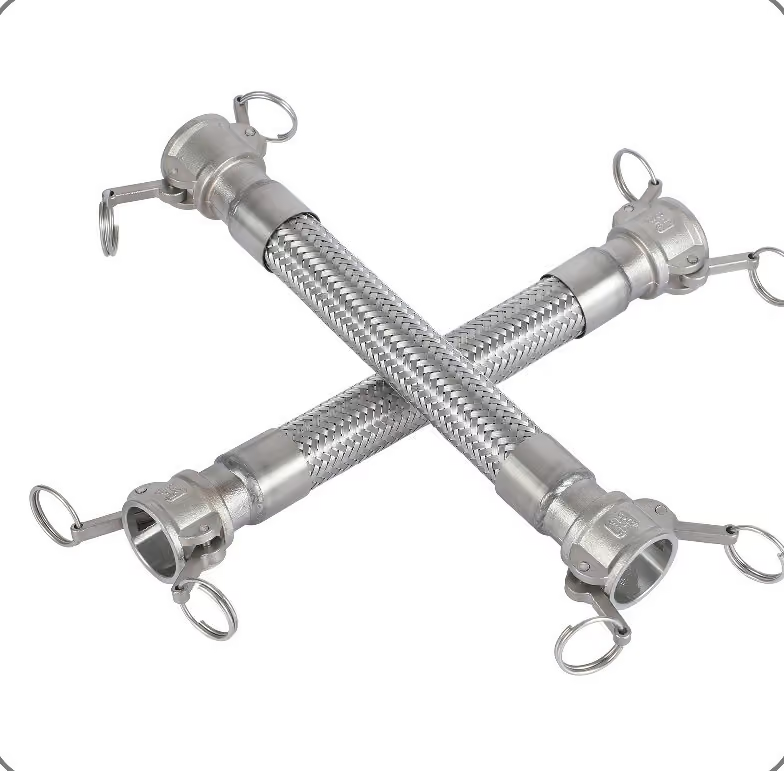
SS Quick-Coupling Corrugated Hose
SS Quick-Coupling Corrugated Hose: corrugated stainless steel hose with quick-coupling ends, SS304/SS316. FerruleX RFQ. Stocked sizes ship fast. Export only.
View details →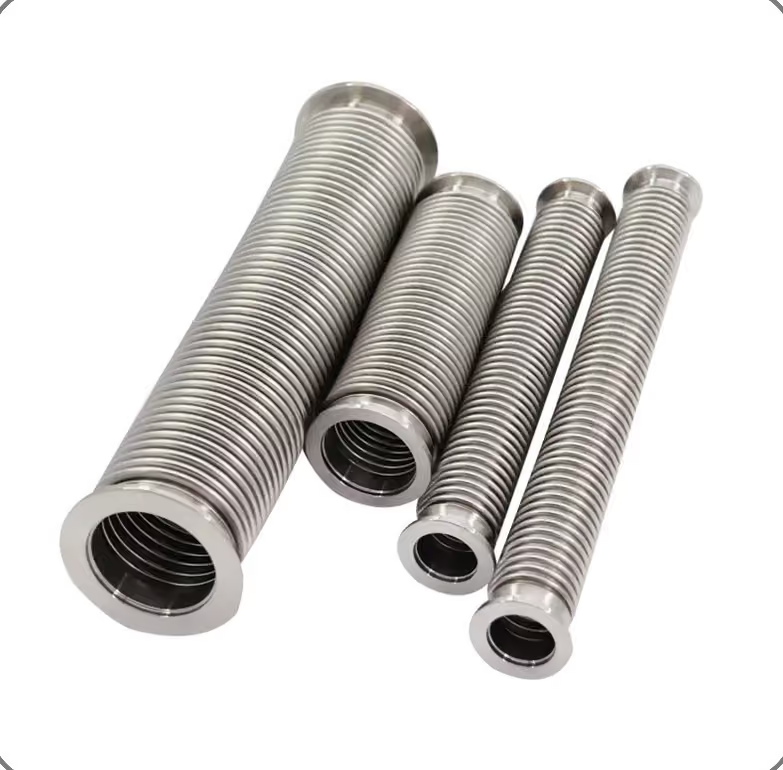
SS KF Flexible Vacuum Corrugated Hose
SS KF Flexible Vacuum Corrugated Hose: KF16–50 / ISO63–100 vacuum hose, SS304. FerruleX factory RFQ — stocked fast. Stocked sizes ship fast. OEM RFQ welcome.
View details →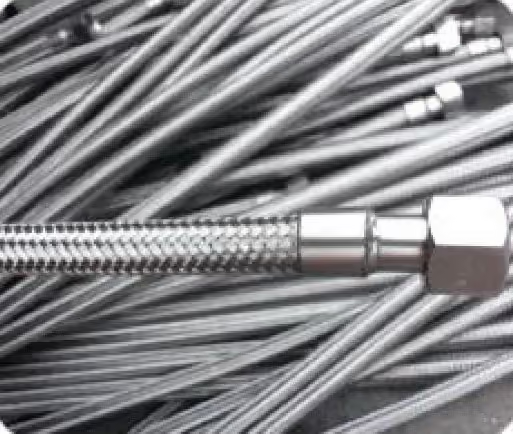
Stainless Steel Corrugated Tube — Types & Sizes
Stainless Steel Corrugated Tube: corrugated SS hose/tube blank OD Φ6–Φ100 for OEM ends. FerruleX RFQ. Stocked sizes ship fast. Export RFQ only — no cart.
View details →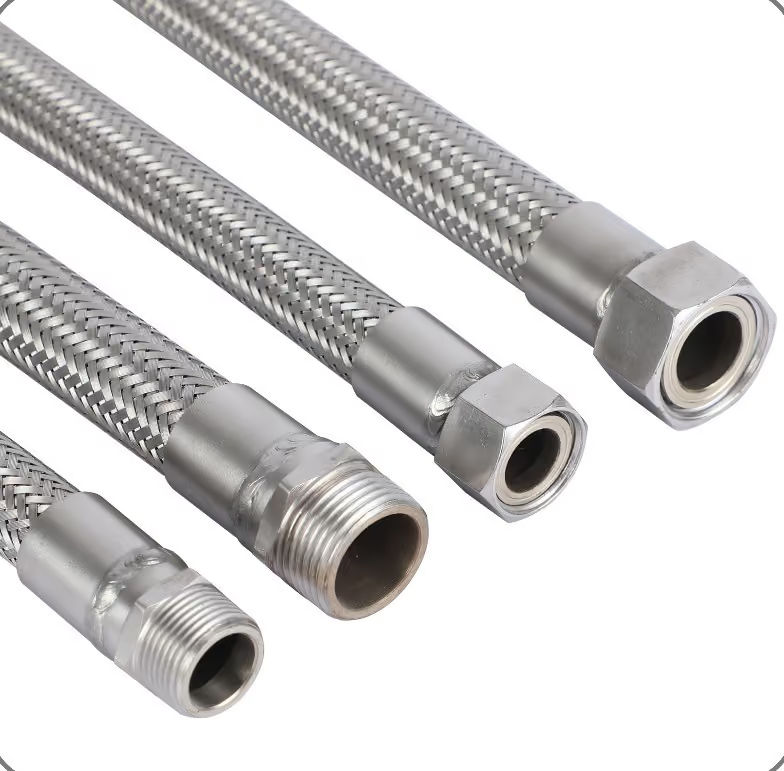
SS Corrugated Hose — Male/Female Thread: Sizes
SS Corrugated Hose — Male/Female Thread: corrugated stainless steel hose, SS304/SS316, Φ6–Φ100. FerruleX factory RFQ. Stocked sizes ship fast. OEM RFQ welcome.
View details →