Flare fittings and compression fittings are the two metal-to-metal ways to join stainless tube without welding, and they are not interchangeable. A flare fitting seals on a cone you form on the tube end itself — metal against metal, with no ferrule.
A compression fitting seals with a ferrule that the nut drives onto the tube’s outside diameter.
The quick answer: order flare where the tube is soft and fully annealed, a flaring tool is on site, and the line sees vibration. Order compression where the tube is harder, the assembly is panel or production work, or no flaring tool exists at the destination. Neither family is better in general — the tube, the tooling and the service decide.
Scope note: this comparison covers industrial stainless tube systems. Vehicle brake and fuel lines follow their own safety codes, are flare-only duties, and sit outside this guide.
Key takeaways
- A flare fitting seals metal-to-metal on a flared cone formed into the tube end: 37° flare is the JIC/AN geometry, 45° is the SAE geometry, and the two are not interchangeable.
- A compression fitting seals with a ferrule that bites and grips the tube OD — no flaring tool, just a clean square cut and deburr before assembly.
- Remakes differ: an undamaged flare and seat can be reassembled; a compression ferrule is permanently set on first make-up and is treated as spent when the joint comes apart.
- Flaring needs soft, fully annealed tube — hard or work-hardened tube can crack or split at the flare — while compression fittings tolerate harder tube because nothing is formed.
Which one do I need to order?
Match the connection to what the line and the workshop can support. Three things decide it: whether the tube can be formed, what tooling exists at the assembly point, and how often the joint comes apart.
| Situation | Order | What decides it |
|---|---|---|
| Tube is fully annealed and a flaring tool is on site | Flare | Tube temper and flaring tooling |
| Vibration-heavy line that is opened more than once | Flare | An undamaged cone and seat can be remade |
| Tube is hard or work-hardened and resists forming | Compression | Nothing is formed on the tube |
| Production assembly on an instrument panel | Compression | Wrenches only, no forming tooling |
| No flaring tool at the destination | Compression | Tube prep: cut and deburr only |
| Gas appliance or fuel connection where codes allow | Flare, 45° SAE | The local code and the approved fitting |
| Instrument gas line | Compression | The fitting is rated and approved for that gas and duty |
If the tubing is fully annealed, a flaring tool is on site, and the service is vibration-heavy, flare is a sound choice.
If the tube is harder, the assembly is production work on a panel, or no flaring tooling exists at the destination, compression is the better order.
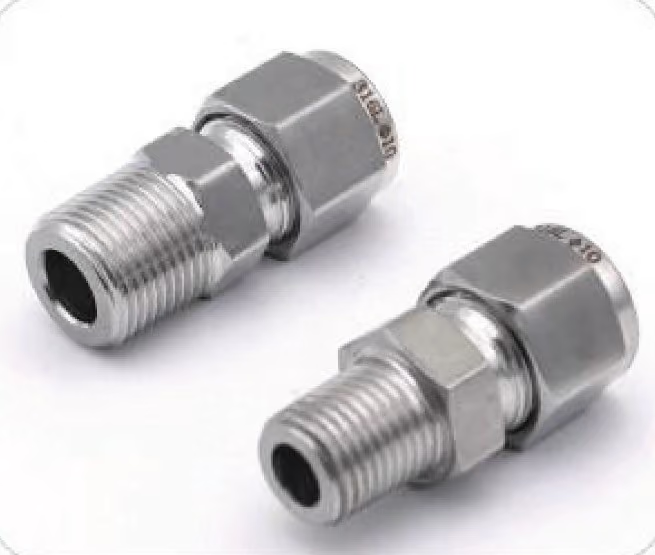
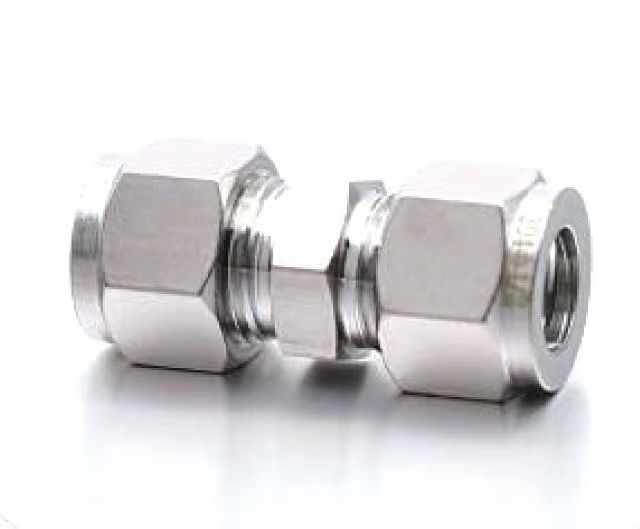
FerruleX builds the compression side: compression fittings with single- and double-ferrule bodies, including the compression straight union and the compression tube-to-male connector for panel take-offs.
Send the tube OD, wall and service description on the RFQ and we match body, ferrule and nut as a set. Request a factory quote.
How do the two differ, part by part?
| Aspect | Flare fitting | Compression fitting | What decides it |
|---|---|---|---|
| Seal mechanism | Flared tube-end cone seats metal-to-metal against the fitting body | Ferrule bites into and seals on the tube OD | Whether the tube end can be formed |
| Tube prep | Cut, deburr, then form the flare with a flaring tool at the correct angle | Cut and deburr only, no forming | Flaring tool and annealed tube on site |
| Remakes | Can be disconnected and reassembled if flare and seat stay undamaged; remake the tube end if scored or cracked | Ferrule is set permanently on first assembly; reuse rules come from the maker, and a disturbed joint normally gets a new ferrule | Whether the sealing part survives disassembly |
| Vibration tolerance | Good on vibration-prone lines when the flare is correct and the tube is supported | Ordinary compression joints are less suited to sustained vibration; engineered instrument designs are built for it | Flare forming quality and line support |
| Gas service behavior | Common on gas appliance and fuel lines in the 45° SAE form, where codes allow | Used on instrument gas lines when the fitting is rated and the code permits; selection is by approval, not habit | The approval for that gas and duty |
| Tooling needed | Tube cutter, deburring tool, flaring tool set to the right angle | Wrenches only, no forming tooling | What exists at the assembly point |
| Where each wins | Field-runnable lines, vibration service, frequent disassembly | Instrument panels, production assembly, no-flare tooling on site | The line’s service and the site’s tooling |
The flare fitting turns the tube itself into the seal. The flaring tool cold-works the annealed tube end outward into a 37° or 45° cone; when the nut tightens, that cone presses against a matching seat in the body and the metal-to-metal line seals. There is no intermediate part — the tube is the sealing element.
That is why only soft, fully annealed tubing should be flared. Hard or work-hardened tube resists the forming, can split at the cone, and leaves a sealing face the seat cannot follow.
Compression fittings move the work to a separate part. The anatomy of that joint is covered in what is a compression fitting, and the single- versus double-ferrule choice in what is a ferrule fitting.
Can you take the joint apart and remake it?
A flare joint that comes apart goes back together if the cone and seat pass inspection. Retightening does not restore a damaged sealing face: if the flare is scored, distorted or leaking, cut it off and flare again.
A compression joint treats the ferrule as consumed. Once the nut is backed off, the ferrule’s set no longer guarantees the seal, and the disciplined move is a new ferrule and fresh make-up per the maker’s instructions.
Check before you remake either joint:
- Flare cone and body seat: free of score, crack or distortion.
- Tube end: sound, with a damaged flare cut back before re-flaring.
- Compression ferrule: a new part, because the set one is spent.
- Make-up and leak check: repeated to the maker’s instructions after the remake.
Which one holds up on vibration and on gas?
Flare connections hold well on vibration-prone lines when properly formed and supported near the joint. Plain compression joints depend on the design: instrument-grade fittings are engineered for vibration service, but the category alone is not a vibration rating.
There is no universal winner on gas. The 45° SAE flare is the long-standing form on gas appliance and fuel connections where codes allow.
Compression joints serve instrument gas lines when the exact fitting is rated and approved for that gas and duty — the approval, not the fitting family, decides.
What do you need on site to install it?
Flare needs a tube cutter, a deburring tool and a flaring tool set to the right angle. Compression needs wrenches only, with the tube still cut and deburred but nothing formed.
On the compression side, insertion depth, ferrule order and leak checks are the subject of how to install compression fittings.
Flare connection, step by step
- Confirm the tube is soft and fully annealed. Hard or work-hardened tube can split at the cone.
- Cut the tube square and deburr the end.
- Set the flaring tool to the angle the fitting standard requires: 37° JIC/AN or 45° SAE.
- Form the cone, then inspect the sealing face for score, crack or distortion.
- Assemble, tighten and leak-check, and support the line near the joint where vibration is present.
Compression connection, step by step
- Cut the tube square and deburr. No forming is needed.
- Check that body, ferrule and nut are the set supplied together, and that ferrule order is correct.
- Insert the tube to the depth the maker specifies.
- Tighten to make-up. The ferrule is set permanently at this point.
- Leak-check. If the joint is later disturbed, treat the ferrule as spent and fit a new one.
Before you order, confirm from the line data
- Tube OD and wall.
- Tube temper: fully annealed, or hard and work-hardened.
- Flare angle the standard requires: 37° JIC/AN or 45° SAE.
- Service: vibration, gas, or neither.
- Tooling at the destination: cutter, deburring tool, flaring tool.
- Whether the fitting must be rated and approved for the gas and duty.
What goes wrong, and what do I change?
| Symptom | Most likely cause | What to change |
|---|---|---|
| Flare splits or cracks while forming | Tube is hard or work-hardened, not fully annealed | Switch to soft, fully annealed tube |
| Flare joint weeps after a remake | Cone or seat is scored, distorted or cracked | Cut the flare off and form a new one |
| Leak persists after re-tightening | Damaged sealing face, which retightening cannot restore | Replace the tube end, not the torque |
| Compression joint leaks after being disturbed | Ferrule was already set on first make-up | New ferrule and fresh make-up per the maker |
| Line loosens in vibration service | Flare not formed correctly, or the tube not supported near the joint | Reform the flare and support the line near the joint |
| Flare will not seat against the body | 37° and 45° geometries mixed | Match the flare angle to the fitting standard |
Most of these come from one habit: re-tightening a face that is already damaged. Inspect the cone and seat before a remake, and the joint either goes back together or the tube end is cut.
FAQ
What is the difference between a flare fitting and a compression fitting? A flare fitting seals metal-to-metal on a cone formed into the tube end, with no separate sealing part. A compression fitting seals with a ferrule the nut drives onto the tube’s outside diameter, gripping it without forming.
Are 37° and 45° flare fittings interchangeable? No. 37° is the JIC/AN geometry, 45° is the SAE geometry; the seats are cut to different angles and will not seat against each other. Match the angle to the standard before ordering.
Can flare fittings be reused after disassembly? Yes, if the flare and seat are undamaged — disconnect, inspect, reassemble. If the cone is scored, cracked or distorted, cut the tube back and form a new flare.
Can you flare hard or semi-rigid stainless tube? Only if the fitting maker allows that temper. Flaring forms the tube end cold, and hard tube can crack or split instead of flowing into the cone; use soft, fully annealed tube unless the maker approves otherwise.
Which is better for gas lines, flare or compression? Neither — the gas, the pressure, the tubing and the local code decide. The 45° SAE flare is common on approved gas appliance connections, and compression serves instrument gas service when the exact fitting is rated and listed.